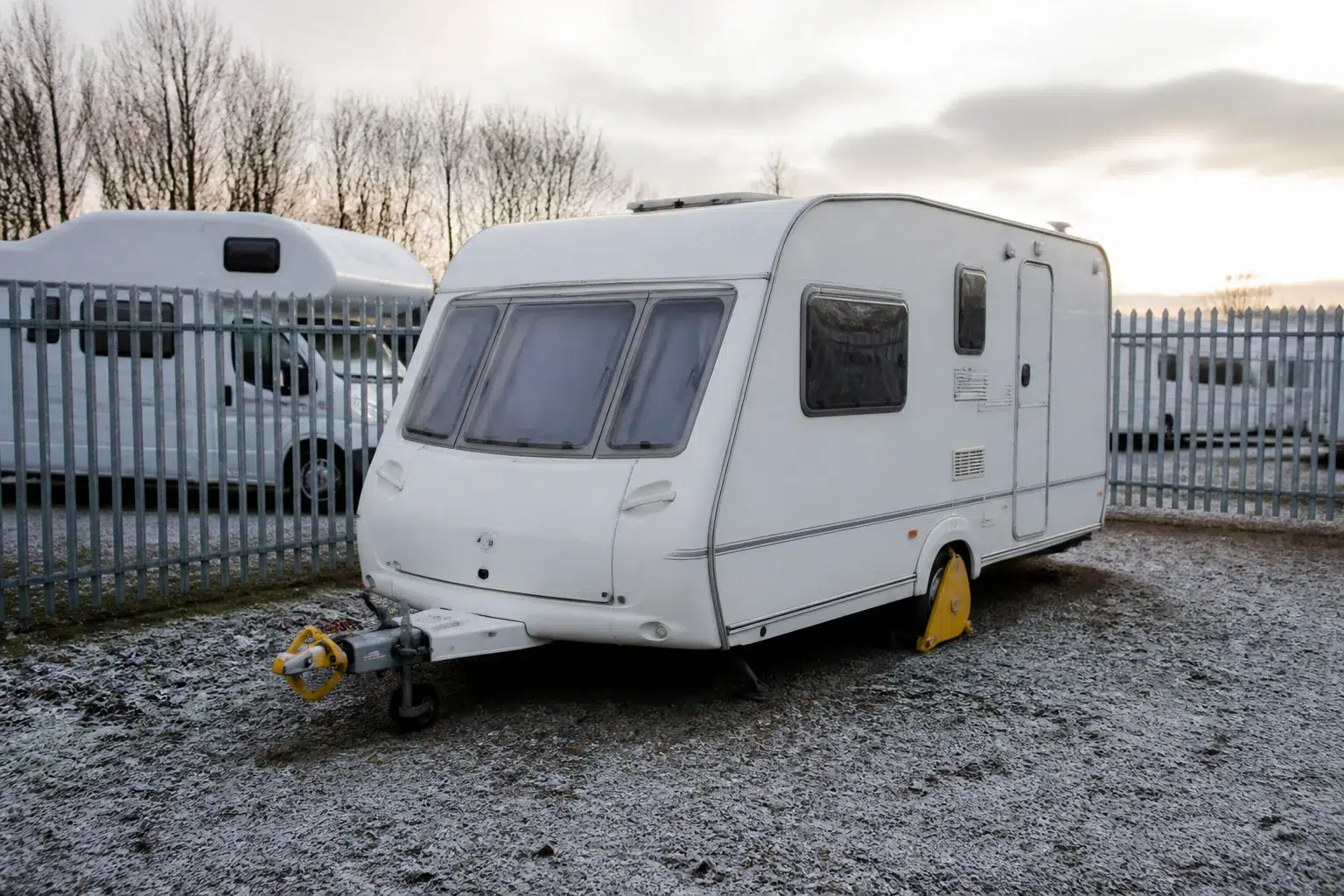
Caravan winter storage is when many touring caravans sit unattended for longest, and it is when the conditions on an insurance schedule matter most. Where the caravan is kept, which locks are on it, and whether the water system has been drained can all decide how a claim is treated. This guide covers storing a caravan over winter from start to finish: getting a touring caravan into storage, keeping it in good shape through the cold months, and bringing it back out in spring.
Key points before the caravan goes away
- Check the security conditions on your schedule, including how many locks or clamps are needed.
- Tell the insurer where the caravan will spend the winter, before it moves.
- Drain the water system; frost damage is often excluded if the caravan was left full.
- Plan a few visits, and keep a dated record of the caravan’s condition.
Where should the caravan spend the winter?
Most owners choose between a storage site, their own drive, and a seasonal pitch on a holiday park. Caravan insurance for a tourer is rated partly on where it is kept, so the choice can change the terms as well as the price.
Many storage sites belong to the CaSSOA scheme, run by the Caravan Storage Site Owners’ Association, which grades sites from bronze to platinum on features such as fencing, controlled entry and CCTV. Some insurers ask for a CaSSOA site, and some price a higher-graded site more favourably. It is worth asking the broker whether a particular award level is expected before you book a space.
Keeping the caravan at home over winter is not always covered in the same way. At least one insurer only covers a touring caravan at the owner’s home, or on the road outside, for a couple of nights while it is loaded, emptied or cleaned, with longer stays by agreement. If the drive is the plan, check the policy first. If your caravan is a static on a holiday park rather than a tourer, static caravan insurance works differently, with the park’s own winter closure rules to consider.
Telling your insurer about caravan winter storage
A policy is set up on the storage address you gave when you bought it. Moving the caravan to a new site, or bringing it home for the winter, without telling the insurer can put cover at risk; at least one specialist insurer says so in plain terms. A short call or email before the move, with the new address and the site’s security, avoids that doubt.
Some storage sites also ask to see proof of insurance before they will take a caravan in, so cancelling cover for the winter can leave you without a space as well as without protection against theft, fire, storm and flood.
Locking it up: the security your schedule names
Most touring caravan policies name the security that must be fitted whenever the caravan is left unattended and unhitched, usually a hitch lock and a wheel clamp or axle lock. Some also ask for a tracker or an alarm, particularly on newer or higher-value tourers. Over the winter the caravan is unattended almost all the time, so these conditions apply for months, not just overnight on a trip.
The detail matters. In a case published by the Financial Ombudsman Service, a twin-axle caravan was stolen from a storage site with a clamp on only one axle. The policy asked for a clamp on each axle, the insurer declined the theft claim, and the ombudsman agreed. If a storage site fits or manages clamps for you, it is worth confirming exactly what has been fitted, and getting it in writing.
A dated photo of each device in place, taken on the day the caravan goes into storage, is a simple record to keep with the policy documents. If a site cannot meet a condition, raise it with the insurer before the caravan is left there.
What insurers usually look at over the winter
| What is checked | Why it matters | Worth doing |
|---|---|---|
| Storage address | Cover and price are set on where the caravan is kept | Tell the insurer before it moves |
| Security devices | Conditions apply whenever it is unattended and unhitched | Fit every device named, on every axle |
| Water system | Frost damage is often excluded if it was left full | Drain tanks, pipes, heater and toilet |
| Damp and wear | Gradual damage is usually treated as maintenance | Ventilate, and keep a service record |
| Contents | Possessions cover can be limited while stored | Take valuables, food and bedding home |
Draining down before the frost
Water left in pipes, the water heater or the toilet can freeze and split them, and frost damage is a common exclusion. At least one specialist insurer excludes damage from frozen water over the winter months where the caravan is not in use and has not been drained down, so a cracked heater found in spring could be a repair to pay for yourself.
Draining down usually means opening every tap and drain valve, emptying the water heater, running the pump briefly to clear it, and emptying the toilet flush tank and cassette. Many owners drain the system on the last trip of the season and leave the drain points open for the winter. The caravan’s handbook shows where the drain points are on your model.
Keeping damp and mice out until spring
Damage that builds up slowly, such as damp, condensation and corrosion, is usually treated as wear and tear rather than an insured event, and damage caused by mice and other vermin is commonly excluded. Prevention matters more than cover here.
- Leave locker and wardrobe doors open and keep floor vents clear so air can move.
- Prop the fridge door slightly open and stand cushions upright, away from the walls.
- Take food, bedding and anything absorbent home.
- Charge or disconnect the leisure battery, and switch off anything left on standby.
- Close the gas cylinder valves, and follow the storage site’s rules on where cylinders are kept.
- Use a breathable cover rather than plastic sheeting, which can trap condensation.
A service and damp check before the caravan goes away gives a dated record of its condition. That record can help if a question about when damage happened comes up later.
Comparing caravan cover before next season?
Storage and winter conditions vary between policies, so they are worth comparing alongside the price. MyMoneyComparison.com introduces caravan owners to specialist UK brokers. It is free to use, with no obligation to buy.
A caravan winter storage checklist
- Read the security conditions on your schedule, including the number of clamps or locks required.
- Confirm the winter storage address with your insurer before the caravan moves.
- Fit every named device and take dated photos of them in place.
- Drain the water system, water heater and toilet, and leave the drain points open.
- Take valuables, food and bedding home.
- Ventilate the interior and stand cushions upright away from the walls.
- Charge or disconnect the leisure battery, and close the gas valves.
- Keep the keys at home, away from the caravan.
- Put a few visits in the diary to air the caravan and check the locks are still in place.
- Note your renewal date, so the policy does not lapse while the caravan is out of sight.
Bringing the caravan out of storage in spring
Before the first trip, check the caravan over in daylight. Look for signs of damp, water marks or rodent damage, and report anything new to your insurer promptly, since a delay can complicate a claim. Close the drain valves, refill and flush the water system, reconnect the battery, and check the tyres, including their pressures and condition, before towing. If the caravan is coming home for the season, tell the insurer about the change of address.
Spring is also a good time to look at the policy itself before the touring season starts. Our guide to comparing specialist insurance properly explains how to set quotes side by side on cover, conditions and excess as well as price. If you also own a motorhome, the motorhome insurance page covers laid-up cover and storing a motorhome off the road.
Caravan winter storage questions
Do I need to tell my insurer when my caravan goes into winter storage?
If the caravan is moving to a different address from the one on the policy, usually yes. Policies are set up on where the caravan is kept, and at least one insurer says moving it without telling them may invalidate cover. A call before the move avoids any doubt.
Is one wheel clamp enough on a twin-axle caravan?
Not if the policy asks for a clamp on each axle. The Financial Ombudsman Service agreed with an insurer that declined a theft claim where a twin-axle caravan in storage had only one clamp fitted.
Can I keep my touring caravan on my drive over winter?
It depends on the policy. Some limit cover at home to a short period for loading or cleaning, while others accept home storage with set security devices in place. It is worth checking the schedule before the caravan comes home for the winter.
How often should I check on my caravan in storage?
A visit every few weeks is common practice. It gives a chance to air the caravan, check for damp, turn the wheels and make sure the security devices are still fitted.
Should I cancel my caravan insurance over winter?
Theft, fire, storm and flood do not stop for the winter, and many storage sites ask for proof of insurance. Cancelling can leave the caravan unprotected for the months it is least watched.
Static caravan insuranceCompare quotes →
Motorhome insuranceCompare quotes →
How to compare specialist insuranceRead the guide →
This guide is general information about UK caravan storage and insurance, not insurance, legal or financial advice. Policies differ, so the schedule and terms of your own policy decide what is covered.


 Founder (2013)
 13+ Years
 FCA Regulated
 LinkedIn