UK Hire and Reward Insurance Quotes
Compare Hire and Reward Insurance
Compare quotes from specialist UK brokers offering hire and reward insurance for cars, vans and motorbikes. Whether you’re delivering parcels, food, takeaway orders or goods for payment, find suitable protection for your delivery work.
Why Compare Hire & Reward Insurance?
- Compare hire and reward insurance for vans, cars and motorbikes
- Suitable for parcel delivery, courier work and multi-drop drivers
- Food delivery, grocery delivery and parcel courier options
What is hire and reward insurance?
Hire and reward insurance is the UK motor insurance use class for carrying someone else's goods or people in exchange for payment. It is a legal requirement under section 143 of the Road Traffic Act 1988 for any driver delivering for hire or reward, including parcel couriers, food delivery riders and multi-drop drivers working with platforms like Amazon Flex, Evri, Deliveroo, Uber Eats and Just Eat. Standard car or van insurance does not cover paid delivery work, even with business use added.
The phrase "hire and reward" sounds technical, but the everyday meaning is straightforward. If you are paid to move goods that do not belong to you, the law sees that as a separate underwriting category from driving for your own purposes. Business use covers driving your own vehicle for your own work. Hire and reward covers carrying other people's goods or people for payment. The difference is the reason a standard van policy with business use added still leaves a courier driving uninsured the moment the first parcel is loaded.
Car, motorbike and van couriers all need hire and reward as a base layer, regardless of vehicle type or delivery work. A food delivery rider on a moped doing Uber Eats shifts, a self-employed multi-drop driver in a van running an Evri or Amazon Flex route, and a same-day car courier moving urgent parcels across town are all carrying other people's goods for payment. See our car courier insurance, van courier insurance and motorbike courier insurance guides for cover specific to your vehicle type.
Most drivers run into the issue at claim stage rather than at quote stage. The certificate of insurance looks fine on the kitchen table. The policy stops responding the moment the insurer reviews the journey and finds out it was paid work. For a fuller breakdown of why standard motor cover falls short, see our guide to courier insurance vs standard van insurance.
Related cover for couriers
How hire and reward insurance works
Tell us about your delivery work
Your vehicle, the goods you carry, the platforms you work with, your annual mileage and your driving history. Honest details up front mean cleaner quotes back and cover that responds at claim stage.
Compare specialist quotes
Your details go to brokers who underwrite hire and reward work daily. They rate the risk against real courier patterns rather than treating you like a standard car or van driver.
Pick your cover and start delivering
Choose the policy that fits your vehicle, your delivery type and your platforms. Add goods in transit or public liability where it makes sense, and you are covered to work from day one.
What does hire and reward insurance cover?
Hire and reward is the use class that sits at the base of every courier policy. Around it, brokers build the cover lines a working delivery driver actually needs: motor protection at the right level, goods in transit, public liability, breakdown and legal expenses.
What ends up on your schedule depends on the vehicle, the work and the broker. A van driver running multi-drop parcels for Amazon Flex carries different exposure to a moped rider on Uber Eats, and the policy is rated accordingly. Compare hire and reward quotes to see which cover lines apply to your delivery work.
All policies are arranged through FCA-regulated UK insurance brokers on the MyMoneyComparison.com panel.
Hire and reward use
The legal foundation of the policy. Allows you to carry parcels, food or any goods for payment under section 143 of the Road Traffic Act 1988. Standard motor cover with business use added does not include this.
Motor cover levels
Choose third party only, third party fire and theft, or comprehensive. Comprehensive is what most working couriers take because it covers damage to your own vehicle after an at-fault claim, which keeps you earning instead of paying repair bills.
Goods in transit
Covers the parcels, food or goods you carry against theft, loss and accidental damage from collection to delivery. Most platforms and commercial clients require proof of goods in transit cover before they will give you work.
Public liability
Covers injury to customers or members of the public, and damage to their property, during delivery. Important for doorstep handovers, restaurant pickups and any incident that happens outside the vehicle itself.
Breakdown and recovery
A working courier vehicle that breaks down on shift loses the day's earnings. Specialist breakdown adds roadside response and recovery sized for delivery work, with priority callout and onward transport for loaded vehicles.
Legal expenses
Funds the legal costs of recovering uninsured losses after a non-fault accident, defending motoring prosecutions and pursuing personal injury claims. Sits as an optional add-on on most courier policies for a small annual premium.
Types of hire and reward insurance
Hire and reward sits at the base of every courier policy, but the product around it changes with the vehicle, the work and how the driver is set up. The right starting point is the policy matched to what you actually drive and how you actually earn.
Car hire and reward insurance
Cover for drivers delivering parcels, documents or food in a car. Common for same-day couriers, Amazon Flex blocks and local platform work. Standard car insurance with business use does not include hire and reward.
Compare car coverVan hire and reward insurance
For drivers running parcel routes, multi-drop work or larger commercial deliveries in a van. Covers hire and reward across high-mileage routes, with goods in transit available as an add-on for the value of parcels carried.
Compare van coverMotorbike hire and reward insurance
Cover for motorbike couriers, plus moped and scooter riders working food delivery and city courier rounds. Two-wheel riders pick up more drops per hour but face higher accident exposure, which the policy reflects.
Compare motorbike coverFood delivery insurance
Hire and reward cover built around takeaway and restaurant work. Sized for the platforms most riders use: Uber Eats, Deliveroo, Just Eat and direct takeaway dispatch. High-frequency short trips need cover priced for that pattern.
Compare food delivery coverOwner-driver hire and reward
For couriers who own their own van or car and operate it themselves on contracted routes for networks like DPD, Yodel or independent multi-drop work. The cover reflects vehicle value and the contract-driven mileage profile.
Compare owner-driver coverSelf-employed courier insurance
Hire and reward cover for sole traders and self-employed couriers, including drivers new to platform work. New venture rating is available for first-year businesses, which avoids the worst-case loading non-specialist insurers apply.
Self-employed coverEvery vehicle and every driver setup has its own underwriting profile. Compare hire and reward quotes to see how your vehicle, work type and platforms are rated across the MyMoneyComparison.com broker panel.
Why the difference between business use and hire and reward matters
The single biggest insurance risk for any courier in the UK is also the easiest one to walk into without realising. Standard car or van insurance, even with business use added, does not cover delivery work for payment. The moment the first paid parcel is loaded, the policy stops responding.
Hire and reward is a use class, not an add-on
UK motor insurance is built around use classes. The three most common are social, domestic and pleasure (SDP), business use, and hire and reward. Each is a separate underwriting category, not a tier or an extra. Adding business use to a private policy does not include hire and reward.
Business use covers driving your own vehicle for your own work: a tradesperson driving to a client's site, an office worker driving between locations. Hire and reward is different. It covers carrying someone else's goods or people in exchange for payment. That is what a courier does, which is why standard policies do not respond on a delivery shift.
For a fuller breakdown of how the cover lines differ on the same vehicle, see our guide to courier insurance vs standard van insurance.
What it actually costs to get this wrong
A realistic scenario. A self-employed driver signs up for Amazon Flex on a standard van policy with business use added. Three weeks in, they reverse into another vehicle at a parcel depot. The other driver claims for £4,200 of damage. The insurer reviews the claim, asks where the journey was going, and discovers it was a paid delivery shift.
| Third party damage claim | £4,200 |
| Driver's own vehicle repair | £1,800 |
| Legal costs and admin fees | £600 |
| IN10 conviction (driving uninsured) | 6 points + fine |
| Future premium loading (5 years) | £3,000+ |
| Total realistic exposure | £9,600+ |
Figures are illustrative and based on typical industry costs for declined uninsured-driving claims. Individual claim outcomes and premium loadings vary by insurer and circumstance.
The same driver on a specialist hire and reward policy would have had every penny of the third party claim handled by the insurer, their own vehicle repaired under comprehensive cover, and no impact on their driving record. The maths is brutal but it is also entirely avoidable.
What happens if you are caught or claim without hire and reward
Police enforcement is increasingly automated. Number plate recognition cameras flag vehicles operating outside their declared use class, and platform data is sometimes available to investigators on request. The most common detection point is at claim stage, when the insurer reviews the journey and finds it was paid work.
The outcomes split three ways. The claim is declined and the driver pays the third party damage personally. The Motor Insurers' Bureau may step in to pay the third party but then pursue the driver to recover the full amount. An IN10 conviction follows, which loads premiums for the next five years and locks the driver out of standard motor insurers in many cases.
The fix is to take a specialist hire and reward policy for couriers from day one, even for a single shift of platform work. Cover is rated against your actual vehicle, mileage and the platforms you work with, so the policy responds when it needs to.
For a fuller breakdown of how hire and reward cover works in the UK, see our hire and reward insurance UK guide.
Hire and reward vs business use insurance
The two use classes sound similar but cover entirely different work. Business use is for driving your own vehicle for your own work. Hire and reward is for carrying someone else's goods or people for payment. Standard motor cover with business use added does not extend to paid delivery work.
| Business use | Hire and reward | |
|---|---|---|
| What journey is covered | Driving to meet clients, visit job sites or move between work locations in your own vehicle. | Carrying someone else's parcels, food or goods between pickup and drop-off in exchange for payment. |
| Whose goods are on board | Your own tools, samples, paperwork or equipment used by you for your own work. | Third party goods belonging to the sender, the platform or the end customer. |
| Who it suits | Tradespeople, sales staff, mobile professionals, sole traders driving for their own business purposes. | Couriers, food delivery riders, parcel drivers, multi-drop operators and platform workers. |
| Suitable for paid delivery work | No. Cover stops responding the moment a paid delivery is loaded, even with business use added. | Yes. Built around exactly this exposure and required under section 143 of the Road Traffic Act 1988. |
| Verdict | Right cover for sole traders driving for their own business. | Right cover for car, motorbike and van couriers carrying goods for payment. |
If you carry anything for payment, you need hire and reward use on your policy, not business use. Compare hire and reward quotes from FCA-regulated brokers built around your delivery work.
Why hire and reward insurance costs more
Hire and reward cover prices higher than standard car or van insurance because delivery work itself carries more risk. High mileage, congested urban driving, time pressure, multi-drop exposure and the value of goods on board all feed into the premium. Knowing which levers move the price helps you ask the right questions before you buy.
Declare your real mileage. Under-declaring is the single biggest mistake new couriers make. The premium saving on paper is small. The cost of a voided claim, when the insurer reviews the actual mileage at claim stage and finds you declared 12,000 miles a year for a 30,000-mile job, is catastrophic. Be honest at quote stage, get the right policy, and the cover responds when it needs to.
MyMoneyComparison.com editorial team
Vehicle type and use class
A van on multi-drop parcel work prices very differently to a moped on food delivery. Use class (hire and reward, courier, fast food, same-day) and vehicle category together set the rating baseline for every policy.
Annual mileage and delivery radius
Couriers cover far more ground than standard motorists. A 30,000-mile-a-year multi-drop driver rates higher than a 10,000-mile local food rider. Declare the real figure based on your actual work pattern, not what feels safer.
Driver age, claims and convictions
Drivers under 25 attract loaded rates on most hire and reward policies. Existing no-claims bonus from car or van cover can sometimes transfer across, depending on the insurer. Motoring convictions push premiums up across the board.
Goods carried and stop pattern
High-value parcels, prescription drugs, electronics and same-day premium goods rate higher than groceries or hot food. Multi-drop work with 100+ stops a day also exposes the vehicle more than long-haul single drops.
Postcode and overnight parking
Where the courier vehicle sleeps matters more than most drivers realise. Locked driveway, garage or gated yard rates better than on-street parking. Postcode crime data and accident frequency both feed directly into the premium.
Security, trackers and dashcams
A Thatcham tracker, immobiliser and front-and-rear dashcam can all reduce premium meaningfully. Dashcams are particularly valuable for couriers because they cut disputed liability claims at busy urban depots and pickup points.
Every courier is rated on their own profile. Compare hire and reward quotes to see how your vehicle, mileage, work type and security shape the premium across our specialist broker panel.
How much does hire and reward insurance cost?
Hire and reward cover costs more than standard car or van insurance because paid delivery work carries higher exposure. The ranges below are indicative annual averages drawn from current UK broker data, showing where comprehensive cover typically sits for the three most common courier profiles.
Most experienced couriers with a clean licence pay between £1,450 and £2,150 a year for comprehensive van hire and reward insurance. Car and scooter riders delivering food typically pay between £900 and £1,800, while newer drivers, urban couriers and high-mileage multi-drop work can push premiums to £4,000 or more. Final prices depend on vehicle, mileage, postcode, claims history and the delivery work declared.
Food delivery and same-day car
indicative annual average, comprehensive
Car couriers on parcel or same-day work, plus motorbike, moped and scooter riders on platforms like Uber Eats, Deliveroo and Just Eat. Lower vehicle value but high accident frequency in urban areas.
Price moves with- Rider or driver age
- Urban postcode
- Platforms worked
Van multi-drop or parcel delivery
indicative annual average, comprehensive
The most common courier profile in the UK. Experienced van driver, clean licence, 1-3 years no-claims discount, working with platforms like Amazon Flex, Evri, DPD or independent multi-drop routes.
Price moves with- Annual mileage
- Van age and value
- Overnight parking
New ventures and complex profiles
indicative annual average, comprehensive
New courier businesses, drivers under 25, recent claims, London or major urban postcodes, or drivers carrying high-value or fragile goods. Premiums scale sharply with risk factors in this band.
Price moves with- Claims and conviction history
- High-value goods carried
- London and major city postcodes
Ranges shown are indicative annual averages for comprehensive cover including hire and reward use, on a clean main driver licence with at least one year of no-claims discount. Insurance Premium Tax is included. Goods in transit, public liability, breakdown and replacement vehicle cover are typically separate options that add to the base premium. Your individual quote depends on the specifics of your vehicle, delivery work and driver profile.
Important: The figures on this page are indicative annual averages drawn from current UK market data and broker industry sources. They are illustrative only and do not constitute a quotation or offer of insurance. Actual premiums vary significantly by individual circumstances, vehicle, postcode, claims history and insurer. Always compare multiple quotes before purchasing. MyMoneyComparison.com Ltd is authorised and regulated by the Financial Conduct Authority, FCA registration number 916241.
Premiums are individually quoted. Compare hire and reward quotes to see what your specific vehicle, work pattern and driver profile prices at across the MyMoneyComparison.com broker panel.
Who needs hire and reward insurance?
Any driver carrying someone else's goods in exchange for payment needs hire and reward use on their motor policy. The work itself defines whether the cover applies, not the vehicle. A car running same-day parcels, a van doing multi-drop routes and a moped on food delivery all sit in the same legal use class.
Parcel delivery drivers
Multi-drop work for Evri, DPD, Yodel and similar networks. Depot-based dispatch, 100 or more stops a day, high annual mileage. Cover needs goods in transit and a rating built around the route pattern.
Food delivery drivers and riders
Uber Eats, Deliveroo, Just Eat and direct takeaway delivery in cars, mopeds, scooters and motorbikes. Short, high-frequency urban trips with platform-specific onboarding requirements for hire and reward cover.
Amazon Flex drivers
App-based shift work delivering parcels in your own car or van, dispatched in two-hour or four-hour blocks. Cover responds to block-based dispatch from the first parcel loaded, not just standard hours. Standard car or van insurance does not include Flex work.
Same-day and on-demand couriers
Urgent dispatch work moving documents, parcels and high-value goods between businesses across town and out of city. Time pressure, variable routes and the value of items in transit all need pricing into the policy.
Owner-driver couriers
Couriers who own their vehicle outright and run contracted routes for a single network or work directly with clients. Cover reflects vehicle value, contract-driven mileage and the network's minimum cover requirements.
Self-employed and new ventures
Sole traders, first-year businesses and drivers brand new to courier work. New venture rating is available from specialist brokers, which avoids the worst-case loading non-specialist insurers tend to apply.
Cover should reflect what you actually deliver, not what your vehicle could carry. Compare hire and reward quotes built around your vehicle, platforms and work pattern.
Common mistakes that leave drivers uninsured
Most uninsured-courier claims do not come from drivers who chose to ignore the rules. They come from drivers who genuinely thought their existing cover was enough. These are the six mistakes that show up most often at claim stage, and the fix for each one.
Assuming business use covers paid delivery work
Business use covers driving your own vehicle for your own work. Paid delivery of someone else's goods is a different use class entirely, called hire and reward. Take a specialist policy from day one, even for a single shift of platform work.
Running deliveries on social, domestic and pleasure cover
SDP is the lowest motor cover use class and excludes any work-related driving, paid or unpaid. A standalone food delivery shift on SDP insurance is uninsured driving from the first pickup. Move to hire and reward before the first delivery, not after the first claim.
Not declaring Uber Eats or Deliveroo on the schedule
Food delivery work has its own rating. A generic hire and reward policy that does not list the platforms can be voided at claim stage if the insurer finds the driver was running app-based food delivery. Every platform you work with goes on the schedule from the start.
Treating Amazon Flex blocks as side income
A two-hour Amazon Flex block in your own car is hire and reward from the first parcel loaded, not casual driving. The app-based dispatch model does not change the legal use class. Declare Flex work to the broker before the first shift, not when something goes wrong.
Declaring one platform and working two or three on the side
Most working couriers split time across two or three platforms. A claim arising on an undeclared platform can be voided even if the declared platform is on the policy. Tell the broker every platform you intend to work with, and the policy is built around the real combined exposure.
Skipping goods in transit cover to save on premium
Motor cover does not pay for the goods in the back of the vehicle. Goods in transit cover handles parcels, food and any goods you carry against theft, loss and accidental damage. Most platforms require proof of it before allocating work.
Get the right hire and reward cover from day one
Specialist brokers on the MyMoneyComparison.com panel underwrite hire and reward work daily. Tell them about your vehicle, the platforms you work with and the goods you carry, and the policy responds when you need it.
Compare Hire and Reward QuotesFCA-regulated brokers, FCA registration number 916241. Comparing courier and hire and reward cover since 2013.
Compare hire and reward insurance quotes with some of the UK's top brokers, including:





Specialist Commercial Motor & Fleet Insurance Brokers

Specialist Commercial Motor & Fleet Insurance Brokers

Gauntlet fleet insurance
Specialist Commercial Motor & Fleet Insurance Brokers

Specialist Commercial Motor & Fleet Insurance Brokers
Everything You Need to Know
More information and answers to help you understand more about hire and reward insurance.
Is hire and reward insurance a legal requirement?
Yes, any driver carrying goods or people for payment must hold motor insurance covering hire and reward use. Standard car or van insurance with business use added does not include it. Delivering for payment without the correct use class is a criminal offence carrying a minimum 6 penalty points and an unlimited fine.
Does my standard car or van insurance cover food delivery?
No. Standard motor cover, including policies with business use added, does not extend to food delivery for payment. Working a single Uber Eats, Deliveroo or Just Eat shift on standard insurance leaves you driving uninsured from the first pickup. You need a specialist hire and reward policy with food delivery declared on the schedule.
Do I need hire and reward insurance for Amazon Flex?
Yes. Amazon Flex blocks are hire and reward work from the moment the first parcel is loaded, even for a single two-hour shift. The app-based dispatch model does not change the legal use class. Standard car or van insurance does not cover Flex work, so you need a specialist policy with Amazon Flex declared on the schedule before your first block.
How much is hire and reward insurance per month?
Most experienced van couriers pay between £120 and £180 a month on a comprehensive hire and reward policy. Car, motorbike and scooter food delivery riders typically pay £75 to £150 a month. Newer drivers, urban couriers and high-mileage multi-drop work push the figure higher. Final cost depends on vehicle, mileage, postcode, claims history and the platforms declared.
What is the difference between hire and reward and goods in transit insurance?
Hire and reward is the motor insurance use class covering the vehicle while it carries goods for payment. Goods in transit cover protects the parcels, food or goods themselves against theft, loss or damage between pickup and drop-off. Most working couriers need both. Most platforms and commercial clients require proof of goods in transit cover before allocating work.
Can I get hire and reward insurance as a new driver?
Yes. Specialist brokers offer hire and reward cover to new drivers and new courier ventures, including drivers in their first year of platform work. Premiums are higher than for experienced couriers, often £2,000 to £4,500 a year for new drivers under 25. Building no-claims discount over the first 2-3 years brings renewal costs down significantly.
Can I work multiple delivery platforms on one policy?
Yes, but every platform you intend to work with must be declared on the schedule at the quote stage. A claim arising on an undeclared platform can be voided even if the declared platform is on the policy. Specialist brokers build a single policy covering parcel delivery, food delivery and multi-drop work, with hire and reward sized to the combined exposure.
What happens if I claim on the wrong type of insurance?
The claim is declined. You pay the third party damage personally, often thousands of pounds. The Motor Insurers’ Bureau may step in to pay the third party but then pursue you for the full amount. An IN10 conviction for driving uninsured follows, which loads future premiums for at least five years and locks you out of standard motor insurers in many cases.
Resources
Insurance Guides, Articles & Resources
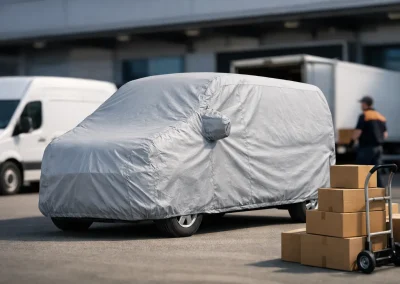

Related Hire and Reward Cover


 Founder (2013)
 13+ Years in the Industry
 FCA Regulated Platform
Content on MyMoneyComparison.com is produced in collaboration with FCA-authorised insurance brokers and financial providers. All pages are reviewed for accuracy and regulatory compliance. MyMoneyComparison.com Ltd is authorised and regulated by the Financial Conduct Authority (FRN: 916241). Last updated: June 2026.

Legal & Regulatory Information:
The MyMoneyComparison.com website is owned and operated by MyMoneyComparison.com Ltd, which does not provide financial advice and does not sell insurance policies. MyMoneyComparison.com Ltd is authorised and regulated by the Financial Conduct Authority (FCA) for insurance mediation and credit broking activity under FCA registration number 916241.
MyMoneyComparison.com Ltd is a data controller under the Data Protection Act 2018, registered on the Data Protection Register under registration number ZA460665.
Registered Office: Jubilee House, 55 Church St, Morley, Leeds LS27 9JQ, United Kingdom.
© 2013-2026 MyMoneyComparison.com Ltd. All rights reserved.