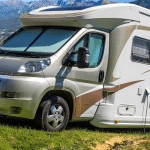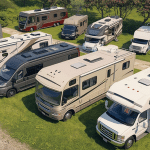


Coach-Built Motorhome Insurance:
Coach-built motorhomes are the most common motorhome type on UK roads, and they require specialist insurance that accounts for their composite-panel bodywork, high agreed values, and the risk split between the coach-built habitation area and the base vehicle chassis. A standard car or van policy will not cover a coach-built motorhome. Agreed value policies are strongly recommended, as market value settlements rarely reflect the replacement cost of a habitation body that has been maintained or upgraded. Premiums typically range from £350 to £1,200 per year depending on value, usage, and storage.
Key Takeaways
- →Coach-built motorhomes account for over 60% of new motorhome registrations in the UK. They are built by mounting a habitation body on a separate van or truck chassis, typically a Fiat Ducato, Peugeot Boxer, or Mercedes Sprinter base
- →Agreed value cover is the correct basis for coach-built policies. Market value settlements at claim time often fall significantly short of replacement cost for a quality habitation body
- →The habitation body and the base vehicle chassis are rated separately by specialist underwriters. Modifications to either element must be declared
- →European cover is included as standard on most specialist motorhome policies, but the number of days per trip and the total annual days abroad vary significantly between insurers
- →Secure off-season storage and an annual habitation service from a NCC Approved Workshop are the two most effective premium reduction steps available to coach-built owners
- →High-value coach-builts over £60,000 (brands such as Bürstner, Hobby, Carthago, or Auto-Trail TRACKER series) require declaration-basis policies with specialist underwriters who have agreed value appetite at that level
💬 From the MMC Insurance Specialists | FCA Reg. 916241
“The single biggest mistake we see with coach-built claims is owners who insured on market value, not agreed value. After five or seven years, the market value of a well-maintained Hobby or Dethleffs can be 30-40% below what it would cost to find and buy an equivalent one in the same condition. When you add the cost of a modern habitation body with current GRP panels, appliances, and fittings, the gap gets wider. Agreed value is not just a premium argument – it is a claims argument.”
Quick Facts
- ✓The NCC (National Caravan Council) estimates over 620,000 touring motorhomes are registered in the UK. The coach-built layout accounts for the majority of these
- ✓Coach-built motorhomes range in value from approximately £25,000 for an entry-level used model to over £200,000 for a top-spec A-class or luxury European coach-built. Value declaration accuracy is critical
- ✓Composite GRP (glass-reinforced plastic) panels used in modern habitation bodies are expensive to repair or replace. Damage that looks minor can involve full panel replacement at £800-£4,500 per panel
- ✓Most specialist motorhome insurers require vehicles to be at least 8-9 weeks old before cover is available, though some will insure pre-registered stock
A coach-built motorhome is a two-part vehicle. The habitation body – the living area, including kitchen, sleeping, bathroom, and storage – is built by a specialist manufacturer and mounted on a separate commercial vehicle chassis. The chassis cab (base vehicle) comes from a mainstream manufacturer such as Fiat, Peugeot, Mercedes, or Renault. These two parts are assessed, maintained, and insured as an integrated whole, but the underwriting logic behind the policy treats them as distinct risk elements.
Standard car or van policies are not written to accommodate this structure. Specialist motorhome insurers use policy wordings that address habitation-body-specific risks: water ingress, GRP panel damage, habitation appliance failure, European touring, and winter storage. This guide covers everything a coach-built owner in the UK needs to know about getting the cover right.
What is a coach-built motorhome and how does it differ from other types?
A coach-built motorhome is defined by its construction method: a purpose-built habitation body is mounted on a separate chassis cab from a commercial vehicle manufacturer. This distinguishes it from A-class motorhomes (integrated body and chassis) and campervans or van conversions (modified panel vans). The coach-built category includes the vast majority of motorhomes sold in the UK market.
| Type | Construction | Common Brands | Insurance Considerations |
|---|---|---|---|
| Coach-built (low-profile) | Habitation body on van chassis; roof height above cab. Most common UK layout | Auto-Trail, Elddis, Bessacarr, Swift, Roller Team, Adria | Standard specialist policy; agreed value recommended from £30,000+ |
| Coach-built (overcab) | Body extends over cab to create fixed bed above driving area | Auto-Trail Excel, Coachman Vision, Bailey Approach | Overcab bed extension adds structural complexity; some insurers apply a small loading |
| A-class | Fully integrated body – no separate chassis cab. Driving compartment within the habitation body | Bürstner, Hobby Optima, Carthago, Pilote, Sunlight | Typically higher value; agreed value essential; some treated as coach-built by insurers |
| Van conversion / campervan | Standard panel van with interior conversion; retains original van bodywork | VW California, Ford Transit custom conversions | Different product class; rated differently to coach-built. See our motorhome insurance guide |
| Coachbuilt on truck base | Larger habitation body on truck chassis (e.g. Mercedes Actros); typically over 7.5 tonnes | Custom expedition builds, luxury conversions | Requires specialist underwriting; may require C or C+E licence. Declared value often £80,000+ |
What does coach-built motorhome insurance cover?
A specialist coach-built policy covers the vehicle as a whole unit, combining motor insurance (road risks, third-party liability, fire and theft for the chassis and body) with elements that go beyond a standard motor policy, including habitation body cover, European touring, contents while touring, and emergency accommodation.
| Cover Element | What It Covers | Standard / Optional | Typical Limit |
|---|---|---|---|
| Vehicle (agreed value) | Full accidental damage, fire, theft, or total loss of the motorhome including habitation body | Standard | Agreed declared value |
| Third-party liability | Legal liability to third parties for injury or property damage caused by the motorhome | Standard | Minimum £20m under Road Traffic Act 1988 |
| European cover | Comprehensive or TPFT cover extended to EU and EEA countries. Green Card no longer required for EU travel from UK | Standard | Varies: 60-180 days per year; per-trip limits of 30-90 days |
| Habitation body cover | GRP panels, roof, floor, habitation windows, awning rails, external lockers, and satellite dish (if fixed) | Standard | Included within agreed value |
| Personal effects | Clothing, electronics, and personal items carried in the motorhome while touring | Optional | Typically £500-£3,000; single-item limits apply |
| Emergency accommodation | Hotel or alternative accommodation costs if the motorhome is undriveable following an insured event while touring | Optional | £500-£2,500 typically; number of nights capped |
| Awning cover | Damage to drive-away awnings and porch awnings while erected at a pitch | Optional | £500-£1,500 per awning |
| Breakdown assistance | Roadside recovery, relay home, and accommodation if breakdown occurs away from home | Optional | Varies; specialist motorhome breakdown policies recommended over standard RAC/AA |
| Legal expenses | Costs of pursuing an uninsured third party or defending a claim; includes accident recovery | Optional | £50,000-£100,000 typically |
Why agreed value matters more for coach-builts than almost any other vehicle
Agreed value means the insurer and policyholder agree a fixed sum at the start of the policy, and that sum is what the insurer pays in the event of a total loss – without any market value negotiation at claim time. For coach-built motorhomes, agreed value is not a premium luxury; it is the correct insurance basis.
The market for quality used coach-built motorhomes does not work like the used car market. A 10-year-old Bürstner in excellent condition with a full service history and recent habitation check commands a price close to its original value precisely because well-maintained examples are scarce. A market value settlement at claim time would reference depreciated book values, not the actual cost of finding and buying an equivalent replacement.
The Agreed Value Gap: A Real-World Illustration
Owner purchases a Hobby Optima De Luxe for £52,000 in 2019. By 2025, the motorhome has been maintained meticulously with annual habitation services and a full workshop record. New equivalent models now cost £68,000 due to materials and build cost inflation. On a market value basis, the insurer’s assessor calculates a settlement of £31,000, referencing general depreciation tables. On an agreed value basis at £52,000, the owner receives what they declared. The gap is £21,000 – enough to determine whether the owner can afford a replacement motorhome at all.
Agreed value premiums are typically 8-15% higher than market value premiums on the same vehicle. The extra cost is almost always justified at total loss claim time.
| Factor | Agreed Value Policy | Market Value Policy |
|---|---|---|
| Total loss settlement | Fixed amount agreed at inception. No negotiation at claim time | Market value at date of loss. Negotiated at claim time, often lower than owner expects |
| Habitation upgrades | Can be factored into the agreed value at renewal if declared | May not be reflected in market value settlement if not standard fitments |
| Partial damage claim | Repair costs settled without reference to the agreed value (for repairs under the total loss threshold) | Repairs settled on similar basis; difference primarily affects total loss calculation |
| Depreciation | No depreciation applied to the agreed sum during the policy year | Market value decreases over time. Payout in Year 5 is lower than in Year 1 |
| Premium cost | Higher (8-15% approximately) to reflect higher guaranteed payout | Lower annual premium but potentially significant shortfall at total loss |
| Best for | Any coach-built over £25,000 in value, especially well-maintained or European-brand vehicles | Lower-value older motorhomes where market value closely tracks replacement cost |
What factors affect coach-built motorhome insurance premiums?
Coach-built motorhome premiums are rated differently from car insurance. The habitation body, the base vehicle, the use pattern, storage arrangements, and annual mileage all influence the final premium. Specialist underwriters apply different weights to these factors than a standard motor insurer would.
| Rating Factor | How It Affects Premium | Owner Action |
|---|---|---|
| Declared value | Higher agreed value = higher premium. Rate (% of value) also increases for values above £60,000 | Declare accurately. Under-declaration saves premium but risks underinsurance at claim |
| Storage security | Certificated secure storage (CaSSOA Gold or Silver) reduces premium by 10-20% vs road or driveway parking | Use a CaSSOA-certificated site during winter months if possible |
| Annual mileage | Coach-builts are typically lower mileage than cars. Most specialists offer bands of 3,000, 5,000, 7,500, and 10,000+ miles. Accurate declaration reduces premium | Declare realistic mileage for your use pattern. Overestimating costs money |
| Driver age and experience | Drivers under 25 or over 75 may face restrictions or loadings. First-year coach-built owners may also face loadings | Consider a motorhome-specific training course to offset new-to-type loading |
| Claims history | Prior motorhome claims will increase premium. Car NCD does not automatically transfer to motorhome policy | Build a separate motorhome claims-free discount over time |
| Security devices | Tracker (Thatcham Category 6+), hitch lock, wheel clamp, and deadlocks can each reduce premium. Insurer may require specific devices at higher values | Fit a GPS tracker approved by your insurer; declare it at inception |
| Base vehicle age | Older base vehicles (pre-2010) may attract higher premiums or restrictions on cover in some insurers’ appetites | Use a specialist broker for older vehicles where standard facilities may decline |
| Habitation service | Annual habitation service by an NCC Approved Workshop demonstrates maintenance and reduces water ingress risk. Some insurers discount for this | Annual service at NCC-approved centre; keep the service record |
Pro Tip: CaSSOA Storage Certification
The Caravan Storage Site Owners’ Association (CaSSOA) certifies storage sites at Gold, Silver, and Bronze security levels. Insurers recognise CaSSOA Gold or Silver certification as a meaningful theft deterrent for coach-built motorhomes, which are significantly harder to steal than cars but remain attractive targets for organised crime. If you store your motorhome off-site from October to March (5-6 months per year), the premium reduction on a £50,000 vehicle can be £80-£180 annually, often more than the cost of secure storage itself. Always confirm your specific storage site name and CaSSOA rating with your insurer at inception.
How much does coach-built motorhome insurance cost in the UK?
Coach-built motorhome insurance premiums vary considerably based on value, driver, and storage. As a general guide, most coach-built owners pay between £350 and £1,200 per year for a comprehensive agreed-value policy. High-value European brands (Bürstner, Carthago, Hobby Optima) over £70,000 typically attract premiums of £900-£1,800+ depending on use and security.
| Vehicle Profile | Typical Annual Premium Range | Notes |
|---|---|---|
| Used coach-built, £25,000-£35,000, over 55 driver, 5,000 miles, home storage | £350 – £550 | Most common profile; good availability from specialist insurers |
| Current model coach-built, £45,000-£60,000, experienced driver, CaSSOA storage | £480 – £750 | Agreed value policy; European cover 90 days included |
| High-value European brand, £65,000-£90,000 (Bürstner, Hobby, Dethleffs), under 65 driver | £700 – £1,100 | Tracker likely required; agreed value mandatory; specialist broker recommended |
| A-class or luxury coach-built, £90,000+, full European touring, 10,000+ miles | £1,100 – £1,800+ | Lloyd’s or specialist market placement; tracker + additional security conditions likely |
| First-time coach-built owner, under 40, any value | Add 20-35% to base rate above | New-to-type loading applies. Consider motorhome driving course (MIDAS or similar) |
Premium ranges are illustrative benchmarks based on typical UK market conditions in 2026. Your actual premium depends on your specific vehicle, driver history, storage, and chosen cover options. Always compare specialist motorhome insurers rather than using standard car insurance comparison sites, which rarely access specialist motorhome underwriting capacity.
Compare Specialist Motorhome Insurance Quotes
FCA-regulated specialists in coach-built motorhome cover. Agreed value policies. European touring included. Free to compare.
MyMoneyComparison.com Ltd is authorised and regulated by the FCA, registration number 916241.
Insuring high-value coach-built and A-class motorhomes
Coach-built motorhomes from premium European manufacturers (Bürstner, Carthago, Hobby, LMC, Pilote, Sunlight, Rapido) represent a distinct insurance category. These vehicles combine a high agreed value with complex GRP habitation bodies, premium interiors, and integrated technology that requires specialist repair. Standard motorhome facilities may not have appetite at these values.
Quick Facts: High-Value Coach-Built Insurance Requirements
Value threshold for specialist placement
Above £60,000: most standard motorhome facilities refer to specialist underwriters. Above £100,000: Lloyd’s market typically required
Security requirements at high values
£60,000+: GPS tracker (Thatcham Cat. 6) typically required. £90,000+: additional deadlocks, hitch lock, and wheel clamp also required by most insurers
Bürstner and premium brand notes
Bürstner Lyseo, Ixeo, and Elegance models are commonly insured at agreed values of £65,000-£140,000. Specialist underwriters have specific appetite for these brands
Valuation evidence
For agreed value over £80,000, some insurers require a current valuation certificate or purchase invoice within 12 months as supporting documentation
European touring cover: what coach-built owners need to check
European cover is a standard inclusion on most specialist motorhome policies, but the terms vary significantly. An owner planning to spend four months per year touring France, Spain, or Italy needs to check the per-trip limit and total annual days limit before assuming full cover is in place throughout their trip.
| Coverage Dimension | Typical Standard Inclusion | Extended Option | Important Note |
|---|---|---|---|
| Countries covered | EU, EEA, plus some standard country lists include Turkey, Morocco, and Andorra | Some policies extend to Israel, North Africa, or Gulf states on request | Always check Ukraine and Balkans coverage separately – not all policies include these |
| Annual days abroad | 60-90 days per year aggregate | Up to 180 days or unlimited with premium addition | Full-time tourers or those spending 3+ months abroad per year must extend or use a touring-specific policy |
| Per-trip limit | 30 days per continuous trip | 60-90 days per trip on request; some have no per-trip limit | Owners planning to overwinter in Spain or Portugal must check this clause specifically |
| Level of cover abroad | Comprehensive in most countries for most policies | Some policies drop to TPFT in certain Eastern European countries – check the schedule | Confirm comprehensive cover extends to all countries on your planned itinerary |
| Green Card (since Brexit) | No longer required for travel in EU/EEA from UK | May still be required for some non-EU countries (Turkey, Russia, Belarus, Ukraine) | Your insurer should issue a Green Card on request if required for your destination |
Three Common Mistakes That Invalidate Coach-Built Claims
- ✗Underdeclaring the agreed value at inception to save premium – at total loss claim, you receive only what you declared, not what the vehicle is actually worth. The difference can be tens of thousands of pounds
- ✗Not declaring modifications to the habitation body (solar panels, upgraded inverter, roof-mounted satellite, upgraded seating, or Al-Ko chassis upgrades) – these are material facts under the Insurance Act 2015 and can result in a proportionate claim reduction or avoidance if not disclosed
- ✗Exceeding the per-trip European limit without extending or notifying the insurer. If a trip lasts 35 days and the per-trip limit is 30, the vehicle may revert to third-party only for the final five days – including for any theft or accidental damage claim at your campsite
What to check when buying a coach-built motorhome before arranging insurance
Several factors from the purchase process directly affect insurance eligibility, agreed value accuracy, and claims validity. Identifying issues before arranging cover avoids disputes later.
Water ingress history
Water ingress is the most common and potentially most expensive fault in coach-built motorhomes. GRP panel joints, window seals, roof light surrounds, and external locker seals all allow water to enter if not maintained. A pre-purchase habitation damp check (ideally an independent one) is essential. Purchasing a vehicle with existing damp damage means the insurer will not cover that damage in a future claim – and if it was not disclosed at inception, it becomes a material non-disclosure. Always obtain a damp report before completing a purchase and before declaring the agreed value.
Base vehicle history check
The chassis and cab unit has its own insurance and accident history, separate from the habitation body. A standard DVLA V5C will confirm the vehicle details, but a full HPI or Experian vehicle history check will reveal outstanding finance, insurance write-off category (Cat N or Cat S), previous accident damage, or mileage discrepancy. A coach-built written off and repaired as Cat N or Cat S must be declared to your insurer at inception. Most specialist motorhome insurers will still cover these vehicles but may apply conditions or exclusions. See gov.uk/check-mot-history for MOT history and gov.uk/vehicle-approval for vehicle type approval records.
Conversion approval (IVA / NSTS)
All coach-built motorhomes sold in the UK must be type-approved or individually approved as motor caravans under UK (and previously EU) vehicle regulations. Most mainstream production coach-builts (Auto-Trail, Elddis, Swift, Bailey, Hobby, Bürstner, Adria, and others) carry full approval. Custom-built or home-conversion coach-builts must have IVA (Individual Vehicle Approval) certification from DVSA. If a coach-built does not have valid type approval, it cannot legally be registered as a motor caravan and some insurers may decline cover or apply specific conditions. Always verify that the V5C correctly states the body type as “Motor Caravan.”
Service and habitation records
A full service history for both the base vehicle and the habitation body strengthens both the agreed value case and any future claims position. An NCC Approved Workshop habitation service record demonstrates that seals, water system, gas system, and electrical systems have been checked annually by a competent technician. At claim time, a complete habitation service history can support arguments about pre-claim condition and reduce disputes over what constituted pre-existing damage.
Frequently Asked Questions
Disclaimer: This article is for informational purposes only and does not constitute financial or insurance advice. Policy terms, cover sections, and premium rates vary between insurers and are subject to change. Your individual circumstances, vehicle specification, and use pattern will affect the cover available to you. Before purchasing any motorhome insurance policy, you should speak to an FCA-regulated broker to ensure the cover is appropriate for your needs. MyMoneyComparison.com Ltd is authorised and regulated by the Financial Conduct Authority (FCA), registration number 916241.
Compare Coach-Built Motorhome Insurance with MyMoneyComparison.com
We connect UK motorhome owners with specialist FCA-regulated brokers who understand agreed value policies, European touring requirements, and habitation cover for coach-built motorhomes.
- →Access to specialist motorhome underwriters not available on standard car comparison sites
- →Agreed value policies from £25,000 to £200,000+ including A-class and high-value European brands
- →FCA authorised and regulated. Registration number 916241. Free to compare, no obligation
Get Your Coach-Built Motorhome Insured Today
Specialist agreed value cover. European touring included. Habitation body, awning, and personal effects extensions available. Free comparison.



 Founder (2013)
 13+ Years
 FCA Regulated
 LinkedIn