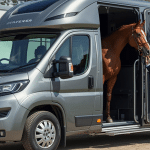


What Is Horsebox Insurance? A Complete UK Guide
Horsebox insurance is a specialist motor insurance policy that covers the unique combination of risks created by a motorised vehicle designed or converted to carry horses: the vehicle itself on public roads, the living or groom accommodation, the horses and their equipment in transit, and liability to third parties. It is legally required in the UK for any motorised horsebox driven on a public road, in the same way as any other motor vehicle, but a standard car or van insurance policy will not cover a vehicle built or adapted to carry horses. The insurance market distinguishes between self-propelled horseboxes (where the motor vehicle and the horse compartment are a single unit) and towed horse trailers (where the trailer is towed behind a separate vehicle), and each requires a different insurance arrangement.
Key Takeaways
- →Horsebox insurance is legally required under the Road Traffic Act 1988 for any motorised horsebox driven on a UK public road. Standard car, van, or lorry insurance will not respond to a claim if the vehicle is designed or adapted to carry horses, as this constitutes a material change in the vehicle’s use and construction.
- →A horsebox policy covers the vehicle and its body or conversion on the road, and can be extended to cover the living or groom quarters, tack and saddlery, veterinary fees following an accident in transit, personal accident for the driver and passengers, and public liability. The horses themselves are not covered by horsebox insurance and require a separate equine insurance policy.
- →Horseboxes over 3.5 tonnes gross vehicle mass require the driver to hold a category C1 or C licence. The vehicle’s GVM is one of the key underwriting variables affecting the premium, and insurers distinguish between small horseboxes on car-derived chassis and large multi-stall professional lorries.
- →The use class declared at inception is critical. Private use only (pleasure and competition) carries a lower premium than commercial use (transporting horses for hire or reward). Using a privately insured horsebox to transport other people’s horses for payment is a breach of the policy and will invalidate the cover.
- →Cover is available at three levels: third-party only, third-party fire and theft, and fully comprehensive. For most horsebox owners the vehicle represents a significant financial asset, and comprehensive cover is the appropriate starting point. The body or conversion, living quarters, and equipment sections are typically only available as additions to a comprehensive base policy.
- →Towed horse trailers are insured differently from motorised horseboxes. A trailer being towed by a car may have third-party liability covered by the towing vehicle’s policy, but the trailer itself (its structure, contents, and any attached equipment) requires a standalone trailer or horsebox insurance policy for full protection.
A horsebox is not just a vehicle. It is a purpose-built or converted combination of motor lorry, horse stall, and often a living or groom space, and each of those components creates insurance risks that a standard motor policy is not designed to cover. Owners who discover this gap at claims stage, typically after an accident on the motorway or a fire in the vehicle overnight, face the double blow of an uninsured loss and a vehicle that may be their primary means of competing or running a professional equestrian business.
This guide explains exactly what horsebox insurance is and why it is different from standard motor insurance, who needs it, what types of horsebox and horse trailer it covers, what a policy actually includes, how cover levels work, what drives the cost, and what add-ons are available. To compare specialist horsebox quotes, see our horsebox insurance comparison page.
Horsebox Insurance
Compare specialist horsebox insurance quotes from UK brokers
💬 From the MMC Horsebox Insurance Team
“The most common gap we see is owners who have insured the vehicle but not the body or conversion. A purpose-built horsebox body can cost £20,000 to £80,000 to replace, and it is often not included in the standard vehicle sum insured. If the conversion is not declared and separately valued, the policy will pay out on the base vehicle value only. Always get the body and living quarters valued and ensure they appear explicitly on the policy schedule.”
MMC Horsebox Insurance Specialists, FCA-authorised (reg. 916241)
Key Fact: Standard Motor Insurance Does Not Cover a Horsebox
A vehicle built or converted to carry horses is classified differently from a standard car, van, or lorry for insurance purposes. The horse compartment, the structural modifications, the loading ramp, and the living accommodation all materially alter the vehicle’s risk profile. Standard motor insurers do not price for these risks, and most personal car or van policies explicitly exclude adapted or converted vehicles. Driving a motorised horsebox on a public road without specialist horsebox insurance is driving uninsured, regardless of what other motor policies are in place.
What Is Horsebox Insurance? The Core Definition
Horsebox insurance is a specialist motor insurance policy designed for vehicles that are built or adapted to transport horses on public roads, and it covers the vehicle, its specialist body or conversion, and the range of associated risks that standard motor policies exclude. It differs from standard vehicle insurance in three fundamental ways: it recognises the specialist construction and purpose of the vehicle, it provides an option to cover the horse compartment and living quarters as separate insured values distinct from the base vehicle, and it allows for use classes that reflect equestrian activity including competition, showing, and professional transport.
The policy covers the motorised horsebox as a road vehicle in the same way any motor policy would, but the specialist nature of the vehicle means the insurer needs to understand and price for several additional risk factors: the height and width of the vehicle and its increased accident risk on rural lanes and low bridges, the weight classification and the corresponding licence requirements, the value of the body or conversion which is often separately costed from the base vehicle, the living or groom quarters and their contents, and whether the vehicle is used privately or commercially to transport horses for hire or reward.
As a general rule of thumb: if the vehicle you are driving on a public road has a horse stall, a loading ramp, or has been modified in any way to carry horses, you need specialist horsebox insurance. A standard vehicle policy, however comprehensive, is not valid for a vehicle adapted to carry horses.
How Is Horsebox Insurance Different from Standard Motor Insurance?
Standard motor insurance is priced and structured for conventional vehicles. A horsebox presents a materially different risk profile in every underwriting dimension: it is typically heavier, taller, and wider than an equivalent commercial vehicle; it operates on rural roads and tight country lanes where accident frequency is higher for large vehicles; it often has significant value locked in a specialist body or conversion that is entirely separate from the base lorry chassis; and it may carry a living accommodation that adds further rebuild cost. None of these factors are priced into a standard motor policy, and most standard motor policy wordings exclude adapted or specialist-use vehicles explicitly.
Specialist horsebox insurers understand these risks and price accordingly. They also understand the equestrian context: the seasonal nature of competition use, the mix of private and occasional commercial activity that many competition owners navigate, and the importance of rapid specialist recovery when a horsebox breaks down with horses on board. This expertise is reflected in the policy structure and in the claims handling, both of which are better suited to horsebox owners than a generic commercial van insurance policy would be.
⚠️ The Horses Are Not Covered by the Horsebox Policy
Horsebox insurance covers the vehicle and its associated equipment and liability. The horses being transported are not insured by a horsebox policy. Injury, illness, or death of a horse during transit is covered by a separate equine insurance policy with a transit or mortality section. Owners who assume their horsebox policy covers the animals inside it face an uninsured loss if a horse is injured in a road accident. Always hold both a horsebox policy and an equine insurance policy with transit cover when horses are regularly transported.
Do I Need Horsebox Insurance?
You need horsebox insurance if you drive a motorised horsebox on a public road in the UK, regardless of how often you use it, whether the horses are on board at the time, or whether the vehicle is used privately or commercially. The legal requirement is tied to the vehicle and its use on public roads, not to whether it is carrying horses at that particular moment.
Standard car and van insurance policies will not cover a vehicle that has been built or adapted to carry horses. This is because the structural modifications, the weight, the height profile, and the specialist use of the vehicle all materially change the risk compared to a standard motor vehicle. Most standard motor insurers will either decline to cover a horsebox or include an exclusion clause that invalidates the policy for adapted vehicles.
The legal basis is the same as for any other vehicle on a UK public road: the Road Traffic Act 1988 requires that any vehicle driven on a public road is covered by valid motor insurance. For a horsebox, that insurance must be a specialist policy that reflects the vehicle’s actual construction and use. A standard car insurance policy does not meet that requirement.
When Do You Need Horsebox Insurance?
| Situation | Horsebox Insurance Required? | Notes |
|---|---|---|
| Driving a motorised horsebox on a public road | Yes, legally required | Even without horses on board. The vehicle’s adapted construction means standard motor insurance does not apply |
| Using a horsebox for private pleasure and competition | Yes | Private use class covers transporting your own horses to shows, events, and competition venues |
| Using a horsebox commercially to transport others’ horses | Yes, commercial use policy | Private use policy is invalid for any commercial activity. A separate commercial or hire and reward policy is required |
| Keeping a horsebox parked on private land only | Not legally required | SORN recommended if not used on roads. Fire, theft, and liability cover for a parked horsebox is still advisable |
| Towing a horse trailer with a car or 4×4 | Separate trailer policy needed | Trailer not automatically covered for damage or loss. The towing vehicle’s policy may cover third-party liability only |
| Professional trainer transporting racehorses | Yes, specialist commercial policy | High value animals require a higher-specification policy. A Newmarket-based trainer moving racehorses requires specialist cover reflecting the vehicle size and animal value |
What Types of Horsebox Does Insurance Cover?
Horsebox insurance covers the full range of motorised vehicles designed or converted to carry horses, from small two-stall boxes on a 3.5-tonne chassis to large multi-stall professional lorries, as well as horse trailer policies for towed horse transport. Each vehicle type has different underwriting considerations, licence requirements, and policy structures.
Horsebox and Horse Trailer Types Covered
-
1.
Small motorised horseboxes (up to 3.5 tonnes GVM): typically one or two-stall boxes built on a light commercial or 4×4 chassis. These can be driven on a standard category B licence. Premiums are lower than larger vehicles, but the body and conversion still need to be declared and insured separately from the base vehicle value. -
2.
Mid-size horseboxes (3.5 to 7.5 tonnes GVM): two or three-stall horseboxes on a dedicated lorry chassis, typically with living quarters. Require a C1 licence to drive. Most privately owned horseboxes in the UK fall into this weight category. The living or groom accommodation and tack storage area add significant value beyond the base vehicle and must be insured accordingly. -
3.
Large professional horseboxes (over 7.5 tonnes GVM): multi-stall vehicles used by professional trainers, competition yards, and commercial horse transport operators. Require a full category C licence. These vehicles carry a significantly higher premium reflecting the vehicle value, the complexity of the body, and the commercial use class. A professional yard in Newmarket transporting racehorses will need a specialist commercial policy at this level. -
4.
Classic and vintage horseboxes: older, often wooden-bodied horseboxes with significant collector or sentimental value. Standard horsebox policies may not provide agreed value cover for classic vehicles, and specialist classic vehicle insurers who also cover the horse transport function may be required. The declared value must reflect the restoration cost, not the market value of an equivalent modern vehicle. -
5.
Horse trailers (towed): two or four-wheel trailers towed behind a car, 4×4, or light commercial vehicle. The towing vehicle’s motor insurance provides third-party liability for the trailer on public roads, but the trailer itself (its structure, the horses inside, and any equipment stored in it) is not covered for damage, theft, or loss without a separate horse trailer insurance policy.
What Does Horsebox Insurance Cover?
A horsebox insurance policy covers the vehicle and its road risk as its core element, with a range of additional sections available to cover the body and conversion, the living quarters, tack and equipment, personal accident, and liability. The extent of cover depends on the policy chosen and what has been declared and agreed at inception.
Core Cover and Optional Sections at a Glance
| Cover Section | What It Covers | Included as Standard? |
|---|---|---|
| Vehicle road risk | The motorised horsebox on public roads: third-party liability, fire, theft, and accidental damage at the chosen cover level | Core: always included |
| Body and conversion | The horse stall, loading ramp, partitions, and structural modifications to the vehicle. Insured as a separate sum from the base vehicle | Must be declared separately |
| Living or groom quarters | The living accommodation fitted within the horsebox including furniture, appliances, and fittings against fire, theft, and accidental damage | Add-on: declare value |
| Tack and saddlery | Saddles, bridles, rugs, and other horse equipment stored in the horsebox against theft and damage while in the vehicle | Add-on: sub-limits apply |
| Transit vet fees | Reasonable veterinary costs incurred if a horse is injured in a road traffic accident while being transported in the insured horsebox | Available on some policies |
| Personal accident | A fixed payment to the driver and named passengers in the event of accidental death or serious injury arising from the use of the horsebox | Optional add-on |
| Public liability | Injury to a third party or damage to their property caused by the horsebox or its loading and unloading process at a venue or show ground | Optional: often required at events |
| Breakdown cover | Roadside assistance and recovery for a horsebox, including recovery of horses where the provider can arrange horse-appropriate transport | Optional add-on |
Compare Horsebox Insurance
Private and commercial horsebox policies from specialist UK brokers
FCA-authorised (reg. 916241).
What Are the Three Levels of Horsebox Insurance Cover?
Horsebox insurance is available at three cover levels: third-party only, third-party fire and theft, and fully comprehensive, and the cover level applies to the vehicle road risk element and typically determines which additional sections of cover are available to add.
| Cover Level | What It Includes | Best Suited For |
|---|---|---|
| Third-party only (TPO) | Legal minimum. Covers injury or damage caused to other people and their property. No cover for your own vehicle, body, or contents. | Minimum legal cover only. Rarely appropriate given the vehicle and body values involved in most horseboxes |
| Third-party, fire and theft (TPFT) | Third-party liability plus the vehicle and body against fire and theft. No cover for accidental damage to your own vehicle. | Limited cover. Some older or lower-value horseboxes where accidental damage cover is disproportionate to vehicle value |
| Fully comprehensive | Third-party liability, fire, theft, and accidental damage to your own vehicle and body. Required base level for most additional cover sections. | Recommended for most owners. Required to add body and conversion, living quarters, tack, and personal accident sections |
What Factors Affect the Cost of Horsebox Insurance?
Horsebox insurance premiums are calculated against a combination of vehicle, driver, and use variables, and the range of premiums in the market is wide: a private owner in the Yorkshire Dales with a two-stall 3.5-tonne box and a clean licence will pay a fraction of the premium charged to a commercial yard operating a large multi-stall lorry on a hire and reward basis.
📊 Key Factors That Drive Horsebox Insurance Premiums
Vehicle weight and size
Heavier vehicles carry higher premiums due to greater damage potential in an accident. The GVM classification also determines the required licence category, which affects the driver risk profile.
Vehicle and body value
The combined sum insured of the base vehicle and the body or conversion is the primary driver of the comprehensive premium. A horsebox worth £80,000 in total costs significantly more to insure than one worth £15,000.
Private vs commercial use
Commercial use (hire and reward) carries a substantially higher premium than private use. Annual mileage and the number of journeys also affect the premium on commercial policies.
Driver age and experience
Drivers under 25 or with limited large vehicle experience attract higher loadings. Holding a C1 or C licence for several years with a clean record is the most effective way to reduce the driver element of the premium.
Where the horsebox is kept
Overnight security matters. A horsebox kept in a locked, alarmed agricultural building in a rural location carries a lower theft premium than one parked on a public road or an unlit yard.
Claims history
A clean claims history earns a no-claims discount that builds year on year. Horsebox NCD is specific to the policy and is not always transferable between insurers, so request written NCD confirmation at every renewal.
MMC Note: Always declare the full and accurate value of the vehicle, body, conversion, and living quarters. Under-declaring the sum insured to reduce the premium triggers the average clause at claims stage and reduces your settlement proportionally.
What Horsebox Insurance Add-Ons Are Available?
Most specialist horsebox policies allow a range of add-ons to be attached to the core road risk cover, and for most active horsebox owners several of these are not optional extras but practical necessities.
Available Horsebox Insurance Add-Ons
- →Specialist horsebox breakdown cover: standard breakdown policies often exclude vehicles over 3.5 tonnes or have no provision for recovering horses stranded on a roadside. Specialist equestrian breakdown cover ensures the recovery service can handle the vehicle weight and arrange appropriate transport for horses. Essential for any horsebox used for long-distance travel or regular competition.
- →European cover: extends the horsebox policy to cover use on European roads, typically including France, Belgium, Germany, and other countries for a defined number of days per year. Essential for owners who travel to competitions in Europe or transport horses across borders. Check whether the European cover includes recovery of horses abroad as well as vehicle recovery.
- →Legal expenses: covers the cost of legal action following an accident that was not your fault, including recovering uninsured losses, pursuing third parties, and defending liability claims. Particularly useful for commercial horsebox operators who may face complex liability disputes involving high-value horses.
- →Public liability: covers injury to third parties or damage to their property caused by the horsebox, its horses, or the loading and unloading process at events and show grounds. Many equestrian venues and competition organisers now require evidence of public liability cover as a condition of entry. See our public liability insurance guide for the broader context.
- →Windscreen and glass cover: large horsebox windscreens can cost several hundred to over a thousand pounds to replace. Windscreen cover handles replacement without affecting the no-claims discount, which is particularly valuable for vehicles driven regularly on rural roads where stone chips are common.
- →Courtesy vehicle: provides a replacement vehicle while your horsebox is being repaired following a claim. For owners who depend on their horsebox for regular competition or commercial transport, a period without a vehicle is not just inconvenient: it has direct financial and competitive consequences. Check that any courtesy vehicle provision covers a vehicle appropriate for your use.
Frequently Asked Questions
Horsebox Insurance Comparison
Compare specialist horsebox and horse trailer insurance from UK brokers
Private owners to commercial yards. FCA-authorised (reg. 916241).



 Founder (2013)
 13+ Years
 FCA Regulated
 LinkedIn