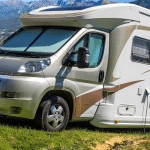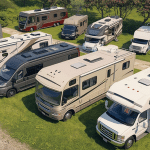


Motorhome insurance vs caravan insurance: what is the difference?
Key takeaways
- →Motorhome insurance is legally required under the Road Traffic Act 1988. Caravan insurance is not. This is the single most important distinction between the two products
- →Your car or motorhome policy covers third party liability for a towed caravan, but doesn’t cover the caravan itself for damage or theft. You need a separate caravan policy for that
- →There are two types of caravan insurance, touring and static, each covering fundamentally different risks. Motorhome insurance covers neither
- →Motorhome insurance costs significantly more, averaging around £500 per year vs £140 to £150 for a touring caravan, because the motorhome policy covers a self-propelled vehicle and its habitation contents
- →If you tow a caravan behind your motorhome, you need both policies. The motorhome policy covers the vehicle and towing liability. A separate caravan policy covers the trailer itself
- →The UK leisure vehicle market spans hundreds of thousands of touring caravans and motorhomes, with the National Caravan Council reporting record motorhome registrations in recent years and continued strong growth in the sector
Motorhome insurance and caravan insurance aren’t interchangeable. They cover fundamentally different assets, operate under different legal frameworks, and are priced using completely different underwriting methods. Getting the wrong one, or assuming one covers the other, is one of the most common and costly mistakes in leisure vehicle ownership.
The core difference comes down to what each vehicle is. A motorhome is a self-propelled motor vehicle. A caravan is a trailer towed by another vehicle. That single distinction drives almost every difference in how insurers treat each, what cover is legally required, and what a policy actually pays for when something goes wrong.
This guide explains every key difference clearly: the legal basis, cover structure, what each policy pays for, the towing gap that catches owners out, and a direct cost comparison using current market data.
💬 From the MMC insurance team | FCA Reg. 916241
“The question we get most often is from motorhome owners who also tow a small folding trailer or caravan and assume the motorhome policy covers everything. It doesn’t. The motorhome policy covers the vehicle and any third party liability from towing, but the moment the caravan is damaged, stolen, or causes a standalone incident on a pitch, it falls outside the motorhome policy entirely. You need both policies. This isn’t a sales pitch, it’s the policy wording.”
Legal position
Road Traffic Act 1988, s.143 says all motor vehicles used on public roads must carry at least third party insurance. A motorhome is a motor vehicle. A touring caravan is a trailer and isn’t a motor vehicle. Caravan insurance is therefore voluntary, though strongly recommended. If a caravan site requires public liability cover as a condition of pitch rental, that cover is built into most specialist caravan policies.
~£500
Avg motorhome premium per year
~£145
Avg touring caravan premium
3-5k
Avg motorhome miles per year
£2-5m
Typical caravan public liability limit
The core differences at a glance
The table below sets out the fundamental differences between motorhome insurance and caravan insurance across every dimension that matters to a buyer.
| Factor | Motorhome insurance | Caravan insurance |
|---|---|---|
| Legal requirement | Yes, Road Traffic Act 1988 | No, voluntary but strongly recommended |
| What it covers | The motorhome as a vehicle and as a home: bodywork, engine, habitation contents, third party liability | The caravan structure and contents: damage, theft, accidental damage, public liability when pitched |
| Vehicle type | Self-propelled motor vehicle (V5C: motor caravan) | Trailer towed by a separate vehicle (touring) or static structure (static) |
| MOT required | Yes, if over 3 years old | No |
| Road tax (VED) | Yes, based on emissions | No |
| Average annual cost | £350 to £650 (comprehensive, £35k to £60k vehicle) | £130 to £200 (touring); £120 to £180 (static) |
| Contents cover | Personal contents typically included (£3,000 to £5,000 default limit) | Contents typically included, often up to £3,000 to £6,000 |
| European cover | 30 to 365 days depending on policy | 30 to 180 days depending on policy |
| No claims discount | Yes, built up per motorhome policy year | Yes, built up per caravan policy year |
What does touring caravan insurance cover?
A touring caravan is a trailer that you hitch to your car or motorhome and tow to your destination. It has no engine. It isn’t a motor vehicle. Your car or motorhome insurance covers third party liability while the caravan is being towed, meaning if the caravan swings out and damages another vehicle, that claim goes through your towing vehicle’s policy. What your towing vehicle policy doesn’t cover is any damage to the caravan itself.
Specialist touring caravan insurance fills that gap. A good policy covers the caravan whether it’s on the road, at a campsite, in storage, or pitched on a seasonal site. Most touring caravan policies include accidental damage, theft, storm and weather damage, fire, and public liability for incidents that happen when the caravan is pitched and people are on or around it.
📋 Touring caravan policy: typical cover
- ✔Accidental damage to the caravan structure, whether moving or pitched
- ✔Theft of the caravan and its contents
- ✔Storm, weather and flood damage (some flood exclusions apply in high-risk postcodes)
- ✔Public liability up to £2 million to £5 million when pitched
- ✔Awning cover (storm damage to awnings often excluded, check policy wording)
- ✔European cover for touring abroad, typically 30 to 180 days
- ✔Family and friends use, most policies allow occasional lending to named individuals
Static caravan insurance: a different product entirely
A static caravan stays in one location, usually on a holiday park or residential site. It doesn’t move and it isn’t towed. Static caravan insurance is structured more like a buildings and contents policy than a motor policy. It covers the structure against damage from storms, fire, flood and vandalism, plus the contents inside.
Many holiday parks ask for proof of public liability cover as a condition of the site licence, so static caravan insurance is effectively mandatory for site occupiers even though it isn’t legally required in the way motor insurance is. Static caravan policies don’t include any road use cover because the vehicle never moves on a public road.
⚠️ The towing cover gap
If you tow a caravan with your motorhome, your motorhome policy extends third party liability to cover damage the caravan causes to other vehicles or property. It doesn’t cover damage to the caravan itself. A caravan worth £15,000 towed by a motorhome worth £50,000 still needs its own caravan insurance policy. Many owners assume the motorhome policy covers everything in the convoy. It doesn’t.
Compare leisure vehicle insurance
Motorhome or caravan, find the right policy today
FCA authorised · Reg. 916241 · Established 2013
Touring caravan vs motorhome cover: side by side
The table below focuses specifically on touring caravan insurance vs motorhome insurance, the two products most often confused by leisure vehicle owners.
| Cover element | Motorhome policy | Touring caravan policy |
|---|---|---|
| Third party liability on road | Included | Covered by towing vehicle policy only |
| Accidental damage to the vehicle | Included (comprehensive) | Included |
| Fire and theft | Included | Included |
| Storm and weather damage | Limited (not a primary risk for motorhomes) | Included as standard |
| Public liability when pitched | Varies, check policy wording | Included, typically £2m to £5m |
| Personal contents | Included, £3k to £5k default | Included, £3k to £6k default |
| Windscreen cover | Included | Not applicable (no windscreen) |
| Breakdown cover | Add-on, not always standard | Provided by towing vehicle breakdown policy |
| New for old replacement | Agreed value available for high-value vehicles | New for old typically available up to 2 years old |
Security requirements: where caravan insurance differs most
One area where caravan insurance diverges sharply from motorhome insurance is security. A motorhome has its own engine immobiliser, steering lock, and can be fitted with a tracker. A caravan sits unattended on pitches and in storage sites, which makes it a higher theft target relative to its value.
Most specialist caravan insurers ask for an approved hitch lock as a minimum condition when the caravan isn’t attached to a vehicle. Some need an ALKO wheel lock, a Thatcham-approved alarm, or a tracking device for caravans above a certain value, typically £15,000 to £20,000. Failing to fit the required security device can void your claim entirely, even if it isn’t the security device that was bypassed during the theft.
🔒 Caravan security: what insurers typically require
- ✔Approved hitch lock when unhitched (most policies: mandatory)
- ✔ALKO or equivalent wheel lock for caravans over £15,000 (many policies)
- ✔Corner steady locks on all four legs when pitched and unattended
- ✔Approved tracking device for high-value units over £20,000 (specialist policies)
Check the security conditions on your policy schedule. Non-compliance voids theft claims regardless of how the caravan was stolen.
Cost comparison: what you actually pay
Motorhome insurance costs significantly more than caravan insurance for comparable asset values, because the motorhome policy is covering a self-propelled vehicle, its habitation equipment, road use liability and personal contents all under one product.
Indicative figures. Actual premiums depend on vehicle value, storage, security, usage, driver history and insurer.
| Profile | Vehicle / caravan | Policy type | Est. annual cost |
|---|---|---|---|
| Couple, 50s, 8 yrs NCD | Coach-built motorhome, £45,000 | Motorhome, comprehensive | £400 to £550 |
| Family, 40s, 5 yrs NCD | Touring caravan, £18,000 | Touring caravan, comprehensive | £140 to £190 |
| Couple, 60s, 10 yrs NCD | Static caravan, £35,000 | Static caravan, comprehensive | £150 to £220 |
| Motorhome owner who also tows a caravan | Motorhome £50,000 + touring caravan £12,000 | Both policies needed | £520 to £700 combined |
📋 Quick facts: motorhome vs caravan insurance
Legal requirement
Motorhome: yes, RTA 1988. Caravan: no. Third party liability for a towed caravan is covered by your towing vehicle policy, not a separate caravan policy.
Two types of caravan
Touring (towed, moves between sites) and static (fixed location, park home). Each needs a different policy. Motorhome insurance covers neither.
Towing gap
Your motorhome policy covers third party towing liability only. Damage or theft of the caravan itself needs a separate caravan policy. Both are needed if you tow.
Cost difference
Motorhome insurance averages around £500 per year. Touring caravan insurance averages around £145. The gap reflects the motorhome’s self-propelled vehicle risk.
Caravan security
Caravan insurers ask for approved hitch locks and often ALKO wheel locks as policy conditions. Motorhome insurers focus on immobilisers and trackers. Different products, different requirements.
Switching vehicle type
NCD from a caravan policy doesn’t transfer to a motorhome policy. Each product builds its own separate claims history. Start fresh when switching from one to the other.
Which policy do you need? Scenarios explained
Many leisure vehicle owners are unsure which policy applies to their situation, particularly when they own multiple vehicles or are switching between leisure vehicle types. Here are the most common scenarios.
| Your situation | What you need |
|---|---|
| You own a motorhome only | Motorhome insurance. Legally required. Covers the vehicle, habitation contents, road use liability and European trips. |
| You own a touring caravan towed by your car | Your car insurance covers third party liability while towing. Specialist touring caravan insurance covers the caravan itself for damage, theft and pitched use. |
| You own a motorhome and also tow a caravan | Both policies. Motorhome insurance covers the motorhome and towing liability. Caravan insurance covers the caravan for damage, theft and pitched liability. |
| You own a static caravan on a park | Static caravan insurance. Not legally required but almost always required by the site licence agreement. Covers the structure, contents and public liability. |
| You’re switching from caravan to motorhome | New motorhome insurance policy needed. Your caravan NCD doesn’t transfer. You’ll need to build a new motorhome NCD from scratch, though some insurers accept introductory NCD on request. |
Five checks before you buy either policy
- [1]Confirm what is and isn’t covered while towing. If you tow a caravan with a motorhome, read both policy wordings before assuming the caravan is covered.
- [2]Check security conditions on caravan policies. Hitch locks and wheel locks are often mandatory policy conditions, not optional advice. Failing to fit them voids theft claims.
- [3]Verify European cover days and whether they apply to both vehicle and contents. A motorhome policy and caravan policy may have different European day limits for the same trip.
- [4]Check the age limit on caravan insurance. Most caravan insurers won’t cover caravans more than 25 years old. If your tourer is a classic model, you need a specialist policy.
- [5]Confirm club membership discounts apply to both policies. Caravan and Motorhome Club or Camping and Caravanning Club membership can bring premiums down on both products. Check each insurer separately.
Frequently asked questions
Disclaimer: This article is for informational purposes only and does not constitute insurance or financial advice. Premiums, cover and policy conditions vary by insurer. Always read the policy wording carefully and compare quotes from FCA-regulated brokers before buying. MyMoneyComparison.com Ltd is authorised and regulated by the Financial Conduct Authority (FCA), registration number 916241.
Motorhome and caravan insurance comparison
Compare specialist quotes for motorhomes, touring caravans and static caravans
FCA-authorised (reg. 916241). Established 2013. Specialist leisure vehicle cover.



 Founder (2013)
 13+ Years
 FCA Regulated
 LinkedIn