

Fleet Tracking Systems Explained:
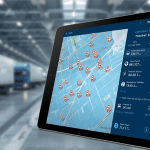
Fleet tracking systems use GPS technology combined with cellular or satellite communication to record and transmit data about vehicle location, movement, speed, driver behaviour, and vehicle health in real time. A complete system has three components: a hardware unit installed in the vehicle, a communication network (typically a SIM-based cellular connection), and a software platform where fleet managers view live maps, reports, and alerts. Modern systems go well beyond simple location tracking – they capture harsh braking events, acceleration profiles, idling time, mileage, engine diagnostics, and driver identity, all of which feed into insurance risk assessment, maintenance scheduling, driver management, and operational efficiency.
Key Takeaways
- →There are two fundamentally different types of fleet tracker: active trackers that transmit data in real time, and passive trackers that store data on the device and download it when the vehicle returns to base. Real-time tracking is now standard for most UK fleet operations
- →Fleet tracking under GDPR requires a lawful basis for processing location and behaviour data. For most business fleets, legitimate interests is the appropriate basis, but workers must be informed that tracking is in place, what data is collected, how it is used, and how long it is retained
- →Thatcham-approved trackers (categories S5, S6, and S7) meet insurance industry standards for stolen vehicle recovery. These are distinct from telematics devices used for driver behaviour monitoring, though some devices combine both functions
- →Fleet tracking data is not the same as tachograph data. Tachographs are a legal requirement for HGVs and coaches under EU/AETR rules and measure driver hours and rest periods. Telematics systems are separate and voluntary for most vehicles, though they may be required by insurers or operators as a condition of cover or contract
- →EV fleet tracking has additional data points specific to electric vehicles: battery state of charge, charging status, range remaining, and charging session history. These are essential for operational planning and are not captured by standard ICE telematics devices
- →The right fleet tracking system depends on fleet size, vehicle type, primary use case, and budget. A five-vehicle trades fleet has entirely different requirements to a 200-vehicle logistics operation. The cost of over-specifying a complex system for a small fleet is as real as the cost of under-specifying for a large one
💬 From the MMC Fleet Team | FCA Reg. 916241
“The single biggest mistake fleet operators make with tracking systems is buying the technology before deciding what question they are trying to answer. If your problem is theft recovery, you need a Thatcham-approved tracker, not a telematics platform. If your problem is high insurance premiums from young drivers, you need driver behaviour scoring that your insurer can read. If your problem is fuel waste from idling, you need engine-on/off reporting. These are different products with different data outputs. The best fleet tracking system is the one that answers the specific question your business is asking – not the one with the most features in the brochure.”
Quick Facts
- ✓GPS (Global Positioning System) uses a network of satellites to determine a device’s position to within a few metres. Commercial fleet GPS receivers typically achieve accuracy of 2-5 metres under normal conditions, reducing to 10-15 metres in urban canyons with signal obstruction
- ✓The UK fleet telematics market encompasses over 5 million active vehicle tracking devices. The majority are cellular-connected (4G LTE) with satellite fallback for areas with poor mobile coverage
- ✓Under GDPR (UK GDPR as retained post-Brexit), location data is classified as personal data when it can identify an individual driver. Fleet operators must have a lawful basis, inform workers of the tracking, and comply with data retention obligations under Article 5
- ✓Thatcham Research is an independent UK automotive safety research centre that certifies vehicle security and tracking products. Thatcham S5, S6, and S7 categories are the relevant stolen vehicle recovery tracker standards recognised by insurers
Fleet tracking has moved well beyond the map showing where each vehicle is. Modern systems capture driver behaviour at the event level, connect to engine diagnostic systems to predict maintenance needs before a breakdown occurs, integrate with dashcams to provide video evidence of incidents, monitor charging status across EV fleets, and feed data directly to insurance platforms to generate real-time risk scores. For fleet managers, the challenge is no longer whether to track – it is understanding what type of system to buy, what data to use, and how to deploy it in a way that is legally compliant, operationally useful, and accepted by drivers.
This guide covers every component of fleet tracking: how GPS works, the difference between active and passive systems, what data is captured, how Thatcham categories work, GDPR obligations, dashcam integration, EV-specific tracking, how to evaluate systems, and what the realistic cost of a properly specified fleet tracking deployment looks like.
How does a fleet tracking system work?
Every fleet tracking system has three components that work together: a hardware device in the vehicle that captures data, a communication link that transmits that data, and a software platform where the data is stored, processed, and displayed. Understanding how these three layers interact explains why different systems have different capabilities, coverage areas, and costs.
| Layer | What It Does | Key Technology | What Can Go Wrong |
|---|---|---|---|
| Hardware (in-vehicle unit) | Receives GPS satellite signals to determine position. Records speed, heading, and movement events. Connects to the vehicle’s CAN bus (on modern vehicles) to read engine data. Stores data locally and transmits it via the communication layer | GPS receiver, accelerometer (for g-force events), CAN bus reader, internal battery (for post-ignition-off reporting), SIM card slot | Poor GPS signal in urban canyons or underground car parks. Incorrect CAN bus wiring for non-standard vehicles. Physical tampering or removal |
| Communication (data transmission) | Transmits position and event data from the vehicle unit to the cloud platform. Most systems use cellular (4G LTE) with automatic fallback to 3G or 2G in areas of poor coverage. Satellite communication is available for offshore, remote, or international operations | 4G LTE SIM (typically a roaming multi-network SIM for maximum coverage), satellite modem (for remote operations) | Data gaps in areas with no mobile coverage. The device stores data locally and uploads when signal is restored, so historical data is rarely truly lost but real-time alerts cannot fire without connectivity |
| Software platform (dashboard) | Receives, stores, and processes data from all vehicles. Provides live map view, trip history replay, driver scoring reports, geofence alerts, maintenance notifications, and integration APIs for third-party fleet management systems. Accessible via browser and mobile app | Cloud-hosted SaaS platform, mapping API (typically Google Maps or HERE), reporting engine, alerting system, user permission layers | Data overload without a clear reporting structure. Poor user adoption if the interface is complex. Integration failures with existing fleet management or payroll systems |
What is the difference between active and passive fleet tracking?
Active tracking transmits data from the vehicle to the platform continuously or at set intervals while the journey is in progress. Passive tracking stores data on the device and downloads it when the vehicle returns to base or is connected to a download unit. For the vast majority of commercial fleet applications in 2026, active real-time tracking is the appropriate choice – but passive systems still have specific use cases.
Active (Real-Time) Tracking
- →Live position visible on platform map updated every 30-60 seconds (or faster on premium plans)
- →Instant alerts sent when events occur: speeding, geofence breach, panic button, harsh braking
- →Stolen vehicle recovery possible within minutes of theft notification
- →Higher monthly subscription cost due to continuous SIM data usage
- →Best for: most commercial fleet operations, customer ETA updates, lone worker safety, insurance telematics
Passive (Store and Download) Tracking
- →Data stored on-device and downloaded manually or when in Wi-Fi range of a base unit
- →No real-time visibility, no live alerts. Data only available after the fact
- →Lower cost: no ongoing SIM or cellular data charges
- →Works in areas with no mobile coverage (useful for remote operations, underground, offshore)
- →Best for: mileage recording, tachograph data download, route compliance auditing where live tracking is not required
What types of fleet tracking hardware are available?
Fleet tracking hardware ranges from simple OBD-port plug-in devices to hardwired units integrated with the vehicle’s CAN bus. The right hardware type depends on the permanence of installation required, the level of data needed, and whether the vehicle is owned or leased. Each type has different installation requirements, data capabilities, and vulnerability to tampering.
| Hardware Type | How It Installs | Data Capability | Best For | Limitation |
|---|---|---|---|---|
| OBD-II plug-in device | Plugs directly into the vehicle’s OBD-II diagnostic port (present on most UK vehicles manufactured after 2001). No wiring required. Takes under 60 seconds | GPS location, speed, trip data, basic engine fault codes (via OBD connection). Accelerometer-based g-force events. Good for insurance telematics | Small fleets, lease vehicles where permanent installation is restricted, rapid deployment | Easily removed by drivers. Less data depth than hardwired CAN bus units. Not suitable as a Thatcham-approved stolen vehicle tracker |
| Hardwired unit (basic) | Professionally installed, wired to the vehicle’s power supply (typically ignition-switched and permanent power). Hidden location within vehicle. Takes 30-90 minutes per vehicle | GPS location, speed, ignition on/off, trip data, harsh events via accelerometer. Internal battery for post-ignition-off tracking. More tamper-resistant than OBD devices | Most commercial fleets where permanent installation is appropriate. Stolen vehicle recovery applications | Installation cost per vehicle. Requires removal when vehicle is sold unless paid for by new owner |
| Hardwired CAN bus unit | Professionally installed with a direct connection to the vehicle’s CAN bus data network. Reads data transmitted between vehicle systems – engine management, gearbox, ABS, fuel system | All data from basic hardwired units plus: actual fuel consumption per trip, engine RPM, gear selection, cruise control usage, DPF status, coolant temperature, brake wear, odometer reading. EV units add battery SoC, charge status, range | Fleets where fuel, maintenance, and driver behaviour data depth is important. HGV operators. EV fleets. Large commercial operations | Higher installation cost. Requires vehicle-specific CAN bus mapping (which varies by manufacturer and model year). Not available for all older or non-standard vehicles |
| Battery-powered asset tracker | Self-contained unit with internal battery. Magnetically attaches to the vehicle or is concealed within the vehicle body. No installation wiring. Battery life typically 2-5 years depending on reporting frequency | GPS location only, typically at low reporting frequency (every few hours to daily) to preserve battery life. No real-time tracking or driver behaviour data. Primarily for location of parked or non-powered assets | Trailers, plant equipment, containers, portable equipment, assets that move infrequently. Knowing where a stored vehicle or piece of equipment is without real-time monitoring | Not suitable for real-time fleet management. Low update frequency means poor stolen vehicle recovery performance. Battery replacement management required at scale |
| Smartphone app-based tracking | Uses the driver’s phone GPS and cellular connection. No hardware installation. Drivers install an app and activate it when driving for work | GPS location, speed, trip data, basic driver scoring (via phone accelerometer). Works for grey fleet mileage capture. No engine data | Grey fleet mileage recording. Occasional-use company car drivers. Businesses where permanent hardware installation is not practical | Requires driver participation – if the app is not opened, no tracking occurs. Not suitable as a Thatcham tracker. Phone battery drain. Privacy concerns around personal device tracking |
What data does a fleet tracking system capture?
The data captured by a fleet tracking system is what makes it operationally and commercially valuable – or intrusive and unused, depending on how it is deployed. Understanding what each data type tells you, and what decisions it supports, is essential before specifying a system. Capturing data for its own sake adds cost and GDPR obligation without operational benefit.
| Data Type | What It Measures | What Decisions It Supports | Hardware Required |
|---|---|---|---|
| Location and position | Vehicle coordinates updated at regular intervals (typically every 30-60 seconds on standard plans). Creates a trip trail showing the route taken | Customer ETA accuracy. Job allocation to nearest vehicle. Unauthorised vehicle use detection. Mileage verification for expenses and tax reporting | Any active tracker |
| Speed | Vehicle speed at each position point. Speeding events flagged when vehicle exceeds a set threshold (typically the speed limit for that road, derived from mapping data) | Driver risk scoring for insurance. Safety management – identifying repeat speeding offenders. Compliance with operating licence conditions. Defending or disputing speeding allegations | Any active tracker with speed limit mapping |
| Harsh driving events | Sudden deceleration above a g-force threshold (harsh braking), rapid lateral acceleration (harsh cornering), rapid acceleration, and in some systems forward collision warnings via forward-facing dashcam | Driver behaviour scoring for insurance telematics. Targeted driver coaching. Identifying drivers who are likely to generate disproportionate wear costs. Demonstrating driver improvement to insurers at renewal | Hardwired or OBD unit with accelerometer |
| Idling time | Time the engine is running with the vehicle stationary. Reported per trip, per driver, per vehicle, and in aggregate. Engine-on/engine-off events are fundamental tracking data points | Fuel cost reduction – excessive idling on a diesel fleet can add 5-15% to fuel spend. Environmental reporting for fleet sustainability targets. Duty of care for driver wellbeing in hot or cold conditions | Any hardwired unit (engine on/off from ignition circuit) |
| Fuel consumption (actual) | Actual litres consumed per trip, per driver, and per vehicle read directly from the vehicle’s fuel management system via CAN bus. Not estimated from distance – actual fuel flow data | Accurate fuel cost allocation. Identifying vehicles with deteriorating fuel efficiency (potential maintenance trigger). Comparing driver fuel use profiles to identify coaching opportunities. Carbon reporting | Hardwired CAN bus unit |
| Engine and vehicle health | Engine fault codes (DTCs) generated when a vehicle’s engine management system detects an issue. Maintenance trigger events such as oil life, DPF regeneration status, brake wear, tyre pressure (TPMS). Odometer reading for service interval management | Predictive maintenance scheduling – catching issues before they cause breakdowns. Remote diagnosis by fleet maintenance teams. Compliance with service schedules. Reducing unplanned vehicle downtime | Hardwired CAN bus unit |
| Driver identification | Associates a journey with a specific named driver using a driver ID key fob, iButton, RFID card, or in-cab PIN. Without driver ID, telematics data is linked to the vehicle – useful, but less valuable for individual driver management | Individual driver scoring. Expense mileage attribution. Identifying which specific driver generated a harsh event. Named driver management for insurance telematics where driver-level data is required by the insurer | Hardwired unit with driver ID reader (additional hardware) |
| EV-specific data | Battery state of charge (SoC) as a percentage, estimated range remaining, charging session start/end times and energy drawn, vehicle charge level at start of shift, total energy consumption per trip (kWh/mile or kWh/100km) | Range anxiety management – knowing whether vehicles have enough charge to complete assigned jobs. Charging cost allocation. Planning public charging stops on long routes. Monitoring charging compliance (drivers not plugging in at end of shift) | EV-compatible CAN bus unit or manufacturer API integration |
What is geofencing and how does it work in fleet tracking?
A geofence is a virtual boundary drawn on the platform map around a geographic area. When a tracked vehicle enters or exits that boundary, the system generates an event – which can trigger an alert (email, SMS, or app notification), log a time-stamped record, or initiate an automated action. Geofencing is one of the most operationally useful features in fleet management and is available on virtually all modern active tracking platforms.
Operational use cases
- →Customer site arrival/departure notifications for job management and billing
- →Depot arrival time recording for payroll and route compliance
- →Automatic job completion triggers when vehicle leaves a site after a set dwell time
- →EV charging station arrival alerts for range management
Security and compliance use cases
- →Alert when a vehicle leaves the approved operating area overnight or out of hours
- →Confirm vehicle is parked at the correct overnight location (fleet parking policy compliance)
- →Notify management immediately if a vehicle enters a restricted zone (e.g. a ULEZ area for a non-compliant vehicle)
- →Stolen vehicle movement detection – alert fires immediately when a stationary vehicle begins moving outside operating hours
What are Thatcham-approved trackers and why do they matter for insurance?
Thatcham Research is the UK’s automotive safety and security research centre, and its vehicle tracker certifications are recognised by UK motor insurers as a standard for stolen vehicle recovery equipment. A Thatcham-approved tracker is not the same as a telematics device: it is a security product specifically designed for rapid location and recovery of a stolen vehicle, with performance tested and certified by Thatcham. Some products combine Thatcham tracking with telematics, but they are distinct functions.
Thatcham Tracker Categories: S5, S6, and S7 Explained
Thatcham certifies vehicle trackers under three current categories, each with escalating capability requirements:
S5 (Stolen Vehicle Recovery)
Passive monitoring, activated when vehicle is reported stolen. Transmits location to a monitoring centre. The entry-level Thatcham certification. Recognised by most insurers for a premium discount on higher-value vehicles
S6 (Driver Recognition)
All S5 features plus a driver recognition element (typically a tag or key fob that must be presented before driving). If an unrecognised driver starts the vehicle, an alert fires immediately. Addresses relay theft and key cloning scenarios
S7 (CAT 6 Driver ID + Immobilisation)
All S6 features plus remote immobilisation capability – the monitoring centre can disable the vehicle remotely after theft is confirmed and the vehicle is safe to immobilise. The highest Thatcham tracker certification. Required by some insurers for high-value vehicles
For fleet managers, the key question is whether the insurer requires a specific Thatcham category as a condition of cover for certain vehicle types (typically high-value vehicles, prestige cars, or HGVs). Fleet telematics devices that are not Thatcham-certified do not qualify for stolen vehicle tracker insurance discounts, even if they provide live location data – the certification standard involves monitoring centre response time requirements and 24/7 alerting that a standard telematics platform does not provide. For the impact of telematics on fleet insurance premiums more broadly, see our fleet telematics and insurance guide.
Compare Fleet Insurance with Telematics Discounts
Specialist fleet brokers who understand telematics data and can negotiate premiums based on your tracked driver behaviour record. FCA regulated, free to compare.
MyMoneyComparison.com Ltd is authorised and regulated by the FCA, registration number 916241.
Fleet tracking and GDPR: what employers must do
Fleet tracking data is personal data under UK GDPR when it can be linked to an identifiable individual. Location data tied to a named driver, or to a vehicle that only one person drives, is personal data and must be handled in accordance with the UK GDPR principles. This is not a technicality – the Information Commissioner’s Office (ICO) has published specific guidance on workplace monitoring and has enforced against employers who have tracked workers without adequate transparency or lawful basis.
| GDPR Requirement | What Fleet Operators Must Do | Common Failure |
|---|---|---|
| Lawful basis for processing | Identify and document the lawful basis for tracking. Most fleet operations rely on legitimate interests – the employer’s legitimate interest in fleet safety, cost management, and operational efficiency, balanced against the driver’s privacy rights. This must be documented in a Legitimate Interests Assessment (LIA) | Assuming that because a vehicle is a company vehicle, no GDPR obligation exists. The data still relates to an identifiable person. Relying on consent as the lawful basis is problematic for employee tracking due to the power imbalance between employer and employee |
| Transparency and notice | Inform every driver that tracking is in place before it begins. The notice must explain what data is collected, why it is collected, how it is used, who it is shared with, and how long it is retained. This is typically delivered via a written vehicle tracking policy and a fair processing notice in employment contracts or a driver handbook | Installing trackers without telling drivers. Using tracking data in disciplinary proceedings against employees who were never informed they were being tracked. The ICO has clear guidance that covert tracking of employees is unlawful except in exceptional circumstances involving criminal investigation |
| Data minimisation | Collect only the data that is necessary for the stated purpose. If the purpose is mileage recording for expenses, real-time 30-second position updates are disproportionate. If the purpose is stolen vehicle recovery, driver behaviour scoring data is unnecessary. Match the data collected to the specific operational need | Buying the most data-rich system available without considering whether all the data is actually needed or used. Unused data collection still creates GDPR liability without operational benefit |
| Data retention limits | Retain tracking data only for as long as is necessary for the stated purpose. Trip data for mileage reimbursement purposes may need to be kept for 6 years for tax purposes. Trip data for operational planning may only need to be kept for 90 days. Set retention periods explicitly and configure the platform to delete data accordingly | Retaining all trip data indefinitely because the platform allows it. Most tracking platforms do not automatically delete data – retention management requires active configuration by the operator |
| Out-of-hours and personal use | If drivers are permitted to take company vehicles home or use them for personal journeys, the tracking policy must address whether the vehicle is tracked during personal use. Continuous tracking of a driver’s personal movements (e.g. evening and weekend journeys) is a significant privacy intrusion. Many employers either switch tracking off during personal use or use a driver-controlled privacy mode | Tracking drivers 24/7 including weekends and holiday use without any personal-use privacy consideration. This is not automatically unlawful but must be justified, documented, and communicated to drivers – it cannot simply be assumed to be acceptable because the vehicle is a company asset |
| Data subject rights | Drivers have the right to access tracking data about themselves (Subject Access Request), the right to request rectification of inaccurate data, and in some circumstances the right to object to processing. Fleet operators must have a process for responding to these requests within the statutory 30-day timeframe | No process in place for handling driver data requests. Dismissing driver requests for their trip data as irrelevant or inconvenient. Failure to respond to a SAR within 30 days is a reportable breach |
Pro Tip: Driver Privacy Mode and Out-of-Hours Tracking
For fleets where vehicles are taken home by drivers, many modern tracking platforms include a driver-controlled privacy mode – typically activated by the driver pressing a button in the vehicle or via an app. During privacy mode, the vehicle’s location is not reported to the platform but the basic security function (stolen vehicle alert if movement occurs while the vehicle should be parked) is maintained. This is an effective practical compromise between operational tracking needs and driver privacy rights during personal time. It should be documented in the fleet tracking policy as a specific provision, with the conditions under which personal use tracking is and is not active clearly stated. Drivers are far more accepting of tracking systems when they have visibility of when they are being tracked and genuine privacy controls during personal time.
How do dashcams integrate with fleet tracking systems?
Dashcams and fleet trackers are increasingly sold and deployed as an integrated system: the dashcam captures video footage, the tracker captures location and event data, and the combined platform links video clips directly to the event that triggered them. An integrated system means that when a harsh braking event is logged at 14:32 on the A46 on Tuesday, the fleet manager can click directly to the dashcam footage of that exact moment and see exactly what happened.
| Dashcam Type | What It Captures | Primary Use Case | GDPR Consideration |
|---|---|---|---|
| Forward-facing only | Road ahead and external environment. Most widely used type. Records continuously and saves event clips (triggered by g-force or manual button) to SD card or cloud storage | Third-party collision liability disputes. Fraud detection (staged accidents). Evidence for insurance claims. Speeding and driving standard review | Images of third parties on the road are personal data. Footage must be handled in accordance with GDPR. Signage on the vehicle notifying others that dashcam recording is in operation is best practice |
| Dual-facing (road + cab) | Road ahead plus the driver’s face and upper body inside the cab. The in-cab camera enables monitoring of driver attention, phone use, and seatbelt compliance | Driver distraction monitoring. Demonstrating driver was not at fault in a disputed incident. AI-based driver attention alerts. Compliance with insurance conditions requiring dashcam footage | In-cab camera footage of the driver is highly sensitive personal data. Requires explicit notice to the driver. Continuous in-cab monitoring is a significant privacy intrusion and must be carefully justified in the LIA. Many employers limit in-cab recording to event clips only, not continuous footage |
| 360-degree multi-camera | Multiple cameras providing a full surround view: front, rear, sides, and optionally in-cab. Common on buses, coaches, and larger commercial vehicles. Some systems provide a live stitched top-down view for manoeuvring assistance | Passenger safety evidence on minibuses and coaches. Protection against spurious slip-and-fall claims by passengers. Complex incident reconstruction. Loading bay and reversing safety | Passenger recording on public transport vehicles or minibuses requires appropriate signage and data handling. Footage involving passengers is personal data under GDPR |
| AI-enabled camera | Forward or dual-facing camera with onboard AI processing. Can detect drowsiness, phone use, seatbelt absence, tailgating, lane departure, and forward collision risk in real time and alert the driver and/or fleet manager immediately | High-mileage drivers (HGV, coach, long-distance van). Fatigue management for lone workers. Real-time safety intervention rather than post-incident review. Insurance telematics programmes that use AI scoring | AI-based monitoring of worker behaviour is subject to ICO workplace monitoring guidance and the Employment Practices Code. Automated decision-making based on AI camera output (e.g. automatic disciplinary action) may engage Article 22 GDPR rights. Document the use of AI-based monitoring in the tracking policy |
How to evaluate and choose a fleet tracking system
The fleet tracking market is saturated with providers offering broadly similar hardware and platform features at varying prices. The buying decision should start with a clear specification of what problem the business is trying to solve, not with a comparison of feature lists. A five-vehicle plumbing firm and a 150-vehicle logistics operation are both buying fleet tracking but have entirely different requirements.
| Evaluation Criterion | What to Ask the Provider | Red Flags |
|---|---|---|
| Hardware compatibility | Does the unit support CAN bus integration for your specific vehicle makes, models, and years? For EV fleets, does it support the manufacturer’s data API or CAN bus EV data? For older vehicles, will OBD or hardwired basic be the appropriate option? | A provider who guarantees CAN bus compatibility without checking your specific vehicle list. CAN bus mapping is vehicle-specific and gaps in compatibility are common for older or unusual vehicles |
| Network coverage | What networks does the SIM use? Is it a multi-network roaming SIM (preferred) or single-network? How does the device behave in areas of no coverage – does it store and forward data or create gaps in the trip history? | Single-network SIM in a country or operating area with known coverage gaps. Check the provider’s coverage map specifically against your fleet’s operating area, not a national average |
| Insurance recognition | Does your current fleet insurer accept data from this provider’s platform? Can the telematics data be exported in a format your insurer or broker can use for renewal pricing? Is the hardware Thatcham-approved if you need stolen vehicle recovery certification? | A provider who claims their data will reduce your premium without confirming your specific insurer accepts their data format. Not all insurers work with all telematics providers |
| Contract terms | What is the minimum contract length? What happens to the hardware and data if you switch providers? Is the hardware owned by you or the provider? What are the cancellation terms mid-contract? | 3-5 year contract terms with significant early termination fees for a new technology deployment. Provider-owned hardware that must be returned if you cancel. No data portability – your historical trip data is locked in their platform |
| Scalability and integration | Does the platform integrate with your existing job management, fleet management, or payroll software via API? Can it scale cost-effectively as your fleet grows? Is there a mobile app for drivers and field managers? | A platform with no API or export capability that locks your data into a proprietary system. Pricing that scales disproportionately with fleet size at the larger end |
| Support and installation | Who installs the hardware? Is installation by the provider’s engineers or self-install? What is the support model – UK-based phone support, chat only, or email-only helpdesk? What is the guaranteed response time for a device failure? | Self-install on hardwired units in a large fleet without professional installation support. Email-only support for a business-critical system. No SLA on device replacement when hardware fails |
What does fleet tracking cost?
Fleet tracking has three cost components: hardware, installation, and ongoing subscription. Hardware is typically either purchased outright or included in the monthly subscription on a leased basis. The total cost of ownership over a 3-5 year period varies significantly between entry-level and enterprise-grade solutions and between OBD plug-in and hardwired CAN bus deployments.
| Cost Component | Typical Range (2026) | Notes |
|---|---|---|
| OBD plug-in hardware (purchased) | £40 – £120 per device | One-off cost. Self-install. Some providers include hardware in subscription cost for minimum contract commitments |
| Hardwired basic hardware (purchased) | £80 – £180 per device | One-off hardware cost. Does not include installation |
| Hardwired CAN bus hardware (purchased) | £120 – £350 per device | Higher cost reflects more sophisticated hardware and vehicle-specific CAN bus harness. Does not include installation |
| Professional installation (hardwired) | £50 – £150 per vehicle | Varies by vehicle type, access difficulty, and whether a dashcam is also being installed simultaneously. Volume discounts available for large fleets |
| Monthly subscription (entry-level platform) | £5 – £12 per vehicle per month | Basic GPS tracking, trip history, speed reporting. Includes SIM data. Suitable for small fleets with basic location and mileage needs |
| Monthly subscription (mid-tier with driver behaviour) | £12 – £25 per vehicle per month | Driver scoring, geofencing, maintenance alerts, basic reporting. The most common level for SME fleet operations |
| Monthly subscription (enterprise with CAN bus + dashcam) | £25 – £55 per vehicle per month | Full CAN bus data, dashcam video storage, AI driver monitoring, fleet management integration, advanced reporting. Large fleet pricing typically lower per vehicle than small fleet pricing |
| Thatcham S5/S6/S7 tracker (subscription) | £8 – £25 per vehicle per month | Includes 24/7 monitoring centre subscription. Hardware typically £100-£300 plus installation. Annual subscription sometimes charged instead of monthly |
Cost ranges are indicative for 2026 UK market. Actual pricing varies by provider, fleet size, contract length, and hardware specification. Volume discounts of 15-30% are common for fleets over 50 vehicles.
Frequently Asked Questions
Disclaimer: This article is for informational purposes only and does not constitute legal, data protection, or insurance advice. GDPR obligations for fleet tracking vary by organisation type, data processing activities, and specific circumstances. Thatcham certification categories, insurance recognition, and FORS requirements are subject to change. Always consult an FCA-regulated fleet insurance broker for insurance-related queries and seek specific data protection advice from a qualified practitioner for GDPR compliance. MyMoneyComparison.com Ltd is authorised and regulated by the Financial Conduct Authority (FCA), registration number 916241.
Fleet Insurance That Recognises Your Tracking Investment
We connect fleet operators with FCA-regulated specialist brokers who understand telematics data, accept driver behaviour scores from major tracking providers, and can use your fleet’s tracked performance record to negotiate better renewal terms.
- →Brokers who work with telematics-based fleet underwriters and can present your driver scoring data as part of the renewal submission
- →Cover for all vehicle types from 2 vehicles upwards, including Thatcham tracker requirements for high-value vehicles
- →FCA authorised and regulated, registration number 916241. Free to compare, no obligation
Get Fleet Insurance That Rewards Safe Driving
Use your fleet tracking data to negotiate better premiums. Specialist fleet brokers, all vehicle types, FCA regulated. Free comparison.