

Is Taxi Insurance Expensive? A UK Driver’s Guide
Is taxi insurance expensive? Compared with an ordinary private car policy, the answer is often yes, and the reason is usually straightforward. You cover more miles, carry passengers for payment and work during busier, higher-risk hours. The more useful question is not whether the price looks high on its own, but whether the premium reflects your work, vehicle, area and claims record fairly, and whether the policy actually meets your licensing and operational requirements.
- •You are paying for hire and reward. Carrying passengers for payment is a different risk from social and commuting use, and standard car insurance does not usually provide it
- •Public hire and private hire are rated differently. A hailed city-centre cab and a pre-booked airport transfer are separate operating models, and neither is automatically cheaper
- •The job details drive the price, not one single factor. Location, mileage, vehicle, hours worked and claims history together shape the quote far more than any headline number
- •Compare like for like, not just the cheapest figure. A low price is poor value if the excess is unrealistic or a limitation would leave you unable to work after a claim
“Drivers often ask us to knock money off a quote, when the bigger saving usually comes from describing the work accurately in the first place. A realistic mileage, the right hire and reward basis, and a clear account of night work or airport runs let a broker approach the markets that actually want your risk. The other trap is buying on headline price alone. If a policy leaves you without a replacement vehicle, the cost of a week off the road can dwarf the premium you saved.”
A quote that looks steep is frustrating when your vehicle is also how you earn. So, is taxi insurance expensive? Often, yes, compared with ordinary private car cover, but the reason is usually clear. You are driving more miles, carrying passengers for payment and operating during busier, higher-risk hours.
The useful question is not whether the price is high in isolation. It is whether the premium reflects your work, vehicle, area and claims record fairly, and whether the policy meets your licensing and operational requirements.
Why taxi insurance can cost more than private car cover
A standard motor policy is built around social, domestic and pleasure use, perhaps with commuting added. Taxi work is different. Your vehicle may be on the road for long shifts, make frequent stops, travel through congested areas and carry passengers who expect a reliable service.
Insurers assess the likelihood and potential cost of a claim. More time on the road can mean greater exposure to collisions, windscreen damage, theft, third-party claims and passenger-related incidents. That does not mean every driver pays the same, or that a high quote is unavoidable. It simply explains why the starting point is commonly higher.
Taxi policies also need cover for hire and reward, meaning you are paid to carry passengers. Ordinary car insurance does not usually provide this. The type of licence you hold and the work you do will shape what insurers are prepared to offer.
Public hire and private hire are assessed differently
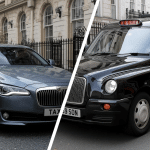
Public hire vehicles, such as black cabs and some hackney carriages, can pick passengers up from ranks or be hailed in the street. Private hire vehicles must generally be pre-booked through an operator. These are different operating models, and insurers may view their exposures differently.
A public hire driver working city-centre ranks late at night may face a different assessment from a private hire driver completing booked airport transfers in a rural area. Neither type is automatically cheaper. Your local authority rules, working pattern and usual routes all matter, and the licensing rules for your council set the framework you operate within.
What affects the price you are quoted?
The largest influences are normally the practical details of the job rather than one single rating factor. Insurers and brokers need an accurate picture, because an incomplete description can lead to unsuitable cover, or to problems if you need to claim.
Your location and where you work
Premiums can differ substantially between licensing areas. A driver working mainly in a busy town or city may meet denser traffic, higher repair costs and more theft risk than someone covering quieter local journeys. Insurers may also consider where the vehicle is kept overnight, along with the places you normally collect and drop off passengers. Secure off-street parking can help in some cases, though it will not outweigh every other factor.
Your vehicle and its repair costs
The make, model, age, engine size and value of your vehicle matter, and so do the cost and availability of replacement parts. Electric and hybrid vehicles can be economical to run, but specialist repairs and battery-related work may affect the insurer’s assessment. Adaptations should be declared. Wheelchair-accessible conversions, additional seating, signage, partitions and specialist equipment can all change the vehicle’s value or repair profile. They may also be required by your licensing authority, so do not assume a standard description is enough.
Mileage, hours and the jobs you accept
Annual mileage is a major consideration. A driver covering 50,000 miles a year presents a very different risk from one working occasional weekend shifts. Be realistic rather than choosing a low estimate to reduce the initial price, and if your mileage changes materially, tell your broker or insurer. Night-time work, school runs, airport transfers, executive bookings and app-based private hire can each affect how your work is assessed. The key is to describe the work you actually undertake, including any plans to expand it during the policy year.
Your driving and claims history
Previous accidents, claims, motoring convictions and licence points can all influence the cost. A non-fault incident may still need to be disclosed if the question asks about all claims or accidents, even where another party paid. No-claims discount can reduce the price, but the way it is recognised varies between providers and policy types. Taxi no-claims history is not always treated in the same way as private car no-claims history, so ask how any existing discount will be accepted before you rely on it.
Driver age, experience and named drivers
Experience behind the wheel and experience in licensed passenger work are separate considerations. A driver may have held a full UK licence for many years but be new to taxi work, which can affect the options available. If more than one person will drive, every regular driver needs to be declared. Adding drivers can raise or reduce a quotation depending on their details, but you should never add someone who will not genuinely use the vehicle simply to try to alter the price.
What a broker needs to quote a taxi driver accurately
Is taxi insurance expensive because of the level of cover?
Not always. The level of protection you select matters, but a comprehensive policy is not automatically the most expensive option once the full risk is assessed. Third-party-only cover protects against injury or damage you cause to others, while comprehensive cover may also protect your own vehicle, subject to the policy terms, exclusions and excess.
The excess is the amount you agree to pay towards an accepted claim. Choosing a higher voluntary excess can lower the premium, but only pick an amount you could comfortably afford if the vehicle needs repairing. A lower upfront price can be poor value if the excess is unrealistic for your business.
You may also want to consider features such as legal expenses, courtesy or replacement vehicle arrangements, breakdown assistance or public liability protection. These are not standard across all policies. Check what is included, what carries an additional charge and whether a benefit genuinely suits a working vehicle. Your council or operator may also set its own requirements, particularly around the minimum level of motor cover, vehicle use and documentation. Confirm those before arranging a policy rather than assuming any hire-and-reward product will be accepted.
Compare Taxi Insurance Quotes
Public hire, private hire and app-based drivers. Hire and reward cover from FCA-regulated brokers. One enquiry, free to compare, no obligation.
Ways to seek a more manageable premium
There is no reliable shortcut that makes every quote cheaper. There are, however, sensible steps that improve the quality of the quotes you receive and stop you paying for the wrong arrangement.
Start with accurate information. Have your badge or licence details, vehicle registration, annual mileage, claims history, driving convictions, postcode, overnight parking details and a clear description of your work to hand. This saves repeated calls and lets a broker approach suitable markets with a consistent risk presentation. Our guide on how to insure a taxi sets out the documents and details worth preparing.
Consider the balance between price and downtime. If your car is off the road after an accident, the cost is not limited to repairs. You may lose income or need to hire a replacement, so a cheaper policy with no workable replacement arrangement may not suit a full-time driver. Paying annually can also cost less overall than monthly instalments, because instalment plans may include interest or finance charges. Cash flow still matters, so compare the total amount payable, not just the monthly figure, and make sure you understand any deposit and cancellation charges.
Security measures, a clean claims record and safe mileage estimates can support a better risk profile over time. They cannot guarantee a lower renewal price, especially if repair costs or local claims trends change, but they give insurers a more complete basis for assessment.
Compare like for like, not just the headline figure
When several quotations arrive, check the policy details before focusing on the lowest number. Look at the excess, permitted use, named-driver restrictions, windscreen cover, replacement vehicle terms and any mileage conditions. Check as well whether there are requirements around security, telematics or where the vehicle may be driven.
Ask direct questions where the wording is unclear. If you work through more than one private hire operator, confirm that the arrangement is disclosed and accepted. If you plan to add a second vehicle, ask how that would be handled rather than assuming a fleet-style arrangement will apply. The cheapest option can be appropriate if it meets your needs and licensing rules. It is not automatically the right choice if a key limitation would leave you unable to work after a claim.
A specialist comparison route can reduce the time spent repeating the same details to individual brokers. MyMoneyComparison.com, FCA registration number 916241, uses one short enquiry to introduce drivers to a panel of FCA-regulated brokers. It does not underwrite policies or set premiums, and the broker or insurer provides the quotation, cover terms and policy conditions. Before you request quotes, write down the work you do now, the work you expect over the next 12 months and the features you cannot operate without. That gives a broker the information needed to find cover that fits your taxi business, rather than simply the lowest starting price.
⚠️ What quietly pushes a taxi premium up, or leaves a gap
Disclaimer: This article is for general information only and does not constitute insurance or financial advice. Policy terms, cover and premiums vary between providers and depend on individual circumstances. Always seek tailored advice from an FCA-regulated broker. MyMoneyComparison.com Ltd is authorised and regulated by the Financial Conduct Authority (FCA), registration number 916241.
Frequently Asked Questions
Public hire, private hire, executive and app-based drivers. Hire and reward cover matched to your licensing area and working pattern.
- •Black cabs, hackney carriages, minicabs and private hire. Single vehicle or building towards a fleet
- •FCA authorised and regulated, registration number 916241. Free to compare, no obligation
Describe your work once. Get taxi quotes back.
MyMoneyComparison.com connects you with FCA-regulated brokers who understand hire and reward, licensing rules and working patterns.
Related Products
Last updated: July 2026



 Founder (2013)
 13+ Years
 FCA Regulated
 LinkedIn