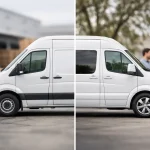


Private van insurance (SDP – social, domestic and pleasure) covers personal use only. Commercial van insurance covers business use: driving to job sites, carrying tools, transporting goods, and any other work-related journey. If you use your van for any work purpose, you need commercial van insurance. Using a private SDP policy for business journeys – even occasionally – voids your cover for those trips entirely. The use class declared on your policy is a legal condition, not a formality. Both types must meet the minimum insurance requirement under section 143 of the Road Traffic Act 1988.
Key Terms
Social, domestic and pleasure (SDP) is the use class that covers personal journeys: leisure trips, the school run, shopping, visiting friends and family. It is private van insurance in everything but name. It does not cover commuting to a regular workplace, driving between job sites, or carrying any tools or goods in connection with a trade.
Commercial van insurance is a broad term covering any policy with a business use class declared. The most common classes are: Class 1 business use (driving in connection with your own occupation, including commuting), carriage of own goods (carrying tools and materials belonging to your business), and carriage of goods for hire and reward (transporting other people’s goods for payment – required for couriers and delivery drivers). Each is rated and priced separately. Declaring the wrong one voids your cover for journeys outside the declared class.
Quick Facts
- ✓SDP van insurance does not cover commuting. Driving from home to a permanent place of work on an SDP policy means you are uninsured for that journey
- ✓Commercial van insurance is typically 15-30% more expensive than equivalent SDP cover, but it is the only valid policy for anyone who uses their van for any work purpose
- ✓Tools and goods carried in the van are not covered by either SDP or standard commercial van insurance – a separate tools-in-transit extension is required
- ✓A van used purely for personal use (camping trips, moving house, hobby transport) can legitimately use SDP – but the moment any journey is work-related, the use class must change
Key Takeaways
- →The distinction between private and commercial van insurance is the use class – what you declare you use the van for determines whether your policy responds to a claim
- →SDP covers personal journeys only. Any work-related use – including commuting to a single workplace – requires a commercial policy with the correct business use class
- →Carriage of own goods (tools and materials) and carriage of goods for hire and reward (courier/delivery work) are separate use classes with different pricing and different cover conditions
- →The wrong use class is not a minor technical issue – it is grounds for a full claim refusal, leaving you personally liable for third-party damage and injury costs
- →Most people who buy a van need commercial insurance, not private SDP – the commercial use cases vastly outnumber the purely personal ones
The phrase “commercial van insurance” covers a wide range of situations, from a sole trader plumber carrying their own tools to a fleet courier transporting parcels for Amazon. “Private van insurance” covers a much narrower one: journeys that have nothing to do with work at all. In practice, almost everyone who owns a van needs commercial cover, because almost everyone uses a van for at least some work-related purpose.
The problem is that many van owners buy on price and declare the lowest use class available, not understanding that the use class is the mechanism by which insurers decide whether to pay a claim. A driver on an SDP policy who has an accident while driving to a job site will find that their insurer declines the claim – not because the policy is inadequate in quality, but because the policy was never valid for that journey. This guide explains exactly where the line sits, which use class applies to which type of van owner, and what the cost difference actually looks like in practice.
Commercial vs Private Van Insurance: The Core Differences
- SDP (private) covers personal journeys only. Leisure, visiting family, shopping. No commuting. No job sites. No carrying tools or goods for work.
- Commercial covers work-related journeys. Multiple sub-classes exist: commuting, carriage of own goods, carriage of goods for hire and reward. Each is separately rated.
- Commuting is not SDP. Driving from home to a single permanent workplace and back is not covered by SDP. You need at least Class 1 business use or a commuting extension.
- Carrying your own tools is not SDP. A self-employed tradesperson carrying tools, materials, or samples needs carriage of own goods as a minimum use class.
- Carrying other people’s goods for payment is hire and reward. SDP and carriage of own goods are both invalid for courier, delivery, or haulage work. A separate hire and reward class is required.
- Wrong use class voids the motor cover for that journey. A third-party claim will still be handled through the Motor Insurers’ Bureau, but your own vehicle damage will not be covered and you can be pursued for costs.
- Commercial van insurance is typically 15-30% more expensive than SDP because the risk of a work-use van is structurally higher: more mileage, more varied routes, more loading and unloading risk.
Expert Note – MMC Insurance Specialists | FCA Reg. 916241
“The most common use class mistake we see is the sole trader who buys SDP because they only use the van occasionally for work. It does not matter how often – the use class needs to cover every type of journey the van makes. A self-employed electrician who uses the van once a week to drive to a job site is making a commercial journey on every single one of those trips. SDP does not cover any of them. The claim refusal arrives at exactly the worst moment. And at that point, the cost difference between SDP and carriage of own goods – which is usually £150 to £250 per year – looks very different from how it looked when the policy was purchased.”
Private vs commercial van insurance: full comparison
The table below compares SDP (private) van insurance against each of the main commercial use classes across every dimension that matters at claim stage. The key point is that these are not interchangeable products with slightly different prices – they cover genuinely different activities, and an insurer will investigate the purpose of each journey when a claim is made.
| Use Class | What It Covers | What It Does NOT Cover | Who Needs It | Typical Premium vs SDP |
|---|---|---|---|---|
| SDP (Social, Domestic, Pleasure) | Personal use only. Leisure, shopping, visiting family. Private journeys with no connection to any employment or trade | Commuting. Driving to job sites. Carrying tools or trade materials. Any work-related journey | Van owners who never use the vehicle for any work purpose. Rare in practice | Baseline (lowest) |
| SDP + Commuting | Everything in SDP, plus driving to and from a single permanent workplace | Multiple workplaces. Job sites. Carrying tools or materials. Any trade activity | Employees who drive their own van to a single fixed workplace and never use it for trade purposes | +5-10% vs SDP |
| Class 1 Business Use | Driving in connection with your own occupation. Multiple workplaces, client visits, travel between sites. Includes commuting | Carrying tools, materials, or goods. Any other named drivers using the van for their own business | Employees, sales representatives, and professionals who travel for work but do not carry trade goods | +10-20% vs SDP |
| Carriage of Own Goods | Everything in Class 1, plus carrying tools, materials, samples, or equipment belonging to the policyholder’s own business | Carrying goods belonging to clients or third parties. Courier or delivery work. Tools cover (requires separate extension) | Self-employed tradespeople: plumbers, electricians, builders, decorators, landscapers, mobile mechanics | +15-30% vs SDP |
| Hire and Reward (H&R) | Carrying goods belonging to other people in exchange for payment. Multi-drop deliveries, couriering, haulage | Goods in transit (separate policy required). Carrying passengers for payment (requires taxi/PHV cover) | Couriers, delivery drivers, Amazon Flex drivers, Evri/DPD subcontractors, same-day logistics operators | +30-50% vs SDP |
Does van insurance cover commuting?
No. A standard SDP van policy does not cover commuting. Driving from your home to a single permanent place of work and back is classified as a separate use class from social and leisure journeys. You need either an SDP + commuting policy or Class 1 business use. This catches out a significant number of van owners who buy SDP assuming it covers their daily drive to a depot or yard.
The distinction matters because it is one of the most commonly investigated journey purposes when a claim is made near a regular workplace. An insurer who receives a claim involving an accident between a driver’s home and a known employer or work site will check whether commuting was included on the policy. If it was not, the claim for own vehicle damage will be declined – the third-party element will still be handled as a legal minimum, but the driver bears all their own costs.
| Journey Type | SDP | SDP + Commuting | Class 1 Business | Carriage of Own Goods | Hire and Reward |
|---|---|---|---|---|---|
| Personal leisure / shopping | ✓ | ✓ | ✓ | ✓ | ✓ |
| Commuting to single workplace | ✗ | ✓ | ✓ | ✓ | ✓ |
| Driving between multiple job sites | ✗ | ✗ | ✓ | ✓ | ✓ |
| Carrying own tools / materials | ✗ | ✗ | ✗ | ✓ | ✓ |
| Carrying other people’s goods for payment | ✗ | ✗ | ✗ | ✗ | ✓ |
| Named additional drivers for their own business | ✗ | ✗ | Policy dependent | Policy dependent | Policy dependent |
Which van insurance use class do I actually need?
The right use class depends on how you actually use the van, not how you describe yourself or what industry you work in. A tradesperson who occasionally borrows their employer’s van for a personal trip still needs the commercial class on their own vehicle if it makes any work-related journey at any point. The question to ask is: does this van ever go anywhere, or carry anything, in connection with any trade or employment? If yes, you need commercial insurance.
| Van Owner Type | Correct Use Class | Common Mistake |
|---|---|---|
| Personal use only (camping, hobby transport, moving house) | SDP | Rarely at issue – but any occasional work use must be declared |
| Employee who drives own van to a single employer’s site | SDP + Commuting (minimum) | Buying SDP only and treating the commute as “personal” use |
| Sales rep, field engineer, or mobile worker visiting multiple sites | Class 1 Business Use | Buying SDP + commuting and assuming multiple sites are covered |
| Self-employed tradesperson: plumber, electrician, builder, decorator | Carriage of Own Goods | Buying SDP or Class 1 only, not declaring the tools and materials carried |
| Gardener, landscaper, window cleaner, mobile cleaner | Carriage of Own Goods | Assuming equipment does not count as “goods” – it does |
| Courier, parcel delivery driver, Amazon Flex, Evri, DPD subcontractor | Hire and Reward | Assuming carriage of own goods or Class 1 business use covers delivery work |
| Food delivery driver (Deliveroo, Uber Eats, Just Eat) | Hire and Reward | Relying on platform cover only – platform cover does not substitute for a valid H&R policy |
| Business operating two or more vans | Commercial use class appropriate to the trade + consider van fleet insurance | Insuring each van separately at higher per-van cost rather than consolidating onto a fleet policy |
How much more does commercial van insurance cost than private (SDP)?
Is commercial van insurance more expensive than private?
Yes. Commercial van insurance is typically 15-30% more expensive than an equivalent SDP (private) policy, and hire and reward cover can be 30-50% more expensive than SDP. The difference reflects genuine risk: commercial vans travel more miles, on more varied routes, often under time pressure, and are loaded and unloaded far more frequently than personal-use vehicles. However, the cost gap between SDP and carriage of own goods for most tradespeople is usually £150-£300 per year – significantly less than the cost of a single declined claim.
| Driver Profile | SDP (approx./yr) | Carriage of Own Goods (approx./yr) | Hire and Reward (approx./yr) |
|---|---|---|---|
| 35yr old, 5yr NCD, provincial location, Ford Transit | ~£700-£950 | ~£950-£1,300 | ~£1,400-£2,000 |
| 28yr old, 2yr NCD, city location, VW Transporter | ~£1,100-£1,500 | ~£1,500-£2,200 | ~£2,200-£3,500 |
| 50yr old, 10yr NCD, rural, Mercedes Sprinter | ~£600-£850 | ~£800-£1,100 | ~£1,200-£1,700 |
| 22yr old, 0yr NCD, city location, any van | ~£2,000-£3,000 | ~£2,800-£4,200 | ~£4,000-£6,000+ |
Premium ranges are approximate market indicators for 2025. Actual premiums vary significantly by location, vehicle value, exact claims history, and insurer. These figures are for comprehensive cover. Always compare multiple quotes. See our van insurance comparison page.
The Most Important Rule in Van Insurance
Commercial van insurance almost always includes private use. Private van insurance never includes commercial use.
This asymmetry is the single most important concept in this article. A commercial policy with carriage of own goods covers everything a private SDP policy covers – plus all your work journeys on top. A private SDP policy covers only personal journeys, and actively excludes every work-related trip. If in doubt between the two, always choose the commercial class appropriate to your trade. You will not lose personal cover – you will gain the work cover you need.
What does neither private nor commercial van insurance cover?
Both SDP and commercial van insurance are motor insurance products. They cover the vehicle and the road risk. Neither covers the contents of the van – tools, equipment, stock, or goods in transit are excluded from standard van policies regardless of the use class. These require separate extensions or standalone policies that are priced and claimed against independently.
| Item | Covered by Van Policy? | What Covers It |
|---|---|---|
| Tools and equipment in the van | No | Tools-in-transit extension or standalone tools cover. Limits typically £2,000-£10,000 depending on trade |
| Stock or materials being transported | No | Goods-in-transit (GIT) insurance. Required for couriers and any business transporting stock or customers’ property |
| Injury to a member of the public off the road (e.g. during unloading) | No | Public liability insurance. Covers claims arising from trade activity that are not road traffic incidents |
| Injury to an employee while working | No | Employers’ liability insurance. Legally required under the Employers’ Liability (Compulsory Insurance) Act 1969 if you employ anyone |
| Mechanical or electrical breakdown | No | Specialist van breakdown cover. Standard AA/RAC membership may not cover commercial use – check before relying on it |
| Van modifications (racking, ply lining, tow bar) | Only if declared | Modifications must be declared to the insurer. Undisclosed modifications can void a claim for van damage |
Pro Tip: The Part-Time Work Trap
A common belief is that occasional work use does not need a commercial policy – that SDP “covers most of it” and the work trips are rare enough not to matter. This is incorrect. There is no minimum frequency threshold. A van that makes one commercial journey per month needs a commercial use class on the policy for that journey to be insured. The test an insurer applies is purpose of journey, not frequency. If you use your van for any work-related purpose at any point during the policy year, the correct use class must cover that type of use. The good news is that many insurers allow you to add carriage of own goods to an existing policy mid-term for a modest additional premium – you do not always have to wait for renewal.
Real scenarios: which policy applies?
The most effective way to understand use class boundaries is through specific situations. These scenarios represent the most common mismatches between what a van owner has and what they actually need – and what happens when the claim is made.
Scenario A – Correctly Covered
A self-employed plumber has carriage of own goods on his policy. He drives from home to a job site with pipe fittings in the back, works all day, and drives home. He also uses the van at weekends to go camping.
All journeys are covered. Carriage of own goods includes the trade journeys, the tools and materials (as vehicle contents via the motor policy – note: the tools themselves still require a separate tools extension), and personal use. His weekend camping trip is covered under the SDP element that most commercial policies include alongside the business use class.
Scenario B – Not Covered
A decorator has SDP cover because “I only use it for personal stuff.” He drives to a customer’s house with paint and rollers in the back. On the way home he is hit by another driver and the van is written off.
The decorator’s own vehicle damage claim is declined. The insurer investigates the journey – a trip from a residential property during working hours with trade materials in the van – and establishes it was a commercial journey not covered by the SDP policy. The third party’s costs are handled through the Motor Insurers’ Bureau, but the decorator receives nothing for his van and is personally responsible for any excess liability. His SDP premium was approximately £200 per year cheaper than carriage of own goods would have been.
Scenario C – Not Covered
A tradesperson has carriage of own goods. A friend asks them to pick up some furniture and deliver it to a customer’s house for £50. The van is scratched during loading.
The claim for the scratched van is declined. Transporting another person’s goods in exchange for payment – even once, even informally – is hire and reward use. Carriage of own goods does not cover it. The £50 payment is irrelevant to the outcome; the legal use class changed the moment payment was accepted for transporting a third party’s property. A hire and reward policy or endorsement would have covered this journey.
Scenario D – Depends on the Policy
An employee uses their employer’s van and their own van on alternate days. Both have carriage of own goods. The employee uses their own van occasionally to pick up a colleague on the way to a shared job site.
Whether the colleague is a named driver on the policy determines whether they are covered. If the colleague is not named and is not covered by an any-driver clause, the journey in the colleague’s presence may create a named driver exclusion issue. Separately, if any payment changes hands for the lift, the use class shifts toward hire and reward. This scenario is best clarified with the insurer or broker before it becomes a claim situation – many commercial policies allow secondary drivers to be added for a modest additional premium.
Frequently Asked Questions
3 signs you must switch to a commercial van insurance policy
If any of these apply to your situation right now, your current SDP policy is not covering those journeys. Contact your insurer today – not at renewal.
You drive to a job site, client premises, or any workplace other than your home
Any journey with a work purpose – even once a week, even if you drive back the same day – is a commercial journey. SDP does not cover it. You need at minimum SDP + Commuting, and if you visit multiple locations, Class 1 Business Use.
Your van carries tools, equipment, samples, or materials connected to any trade
Tools in the van make it a trade vehicle in the eyes of the insurer, regardless of whether you are actively using them on that specific journey. Self-employed tradespeople need carriage of own goods as a minimum. Class 1 Business Use does not cover the tools themselves as a use class.
You transport any goods belonging to another person – even informally, even for a small payment
The moment you accept payment to move someone else’s property, the journey becomes hire and reward – a separate, higher-rated use class that requires a specialist policy. Carriage of own goods does not cover it. Platform cover from Amazon Flex, Deliveroo, or Evri does not substitute for a valid hire and reward policy.
Important: Information, Not Advice
This article provides general information about van insurance use classes in the UK. It does not constitute regulated insurance or legal advice. Use class definitions, policy terms, and premium ranges vary between insurers and depend on individual circumstances. Premium ranges quoted are approximate market indicators only. If you are unsure which use class applies to your situation, speak to an FCA-regulated van insurance broker before purchasing a policy. Driving without the correct use class is equivalent to driving without valid insurance. MyMoneyComparison.com Ltd is authorised and regulated by the Financial Conduct Authority (FCA), registration number 916241.
Duty of Fair Presentation: Under the Insurance Act 2015, all policyholders have a legal duty to make a fair presentation of the risk when taking out or renewing an insurance policy. This means disclosing every matter that is material to the risk – including the correct use class for every type of journey the van makes – in a clear and accessible manner. Failing to disclose commercial use on a van policy is not simply a technicality: it constitutes a breach of the duty of fair presentation and gives the insurer grounds to avoid the policy, reduce any claim payment, or in serious cases treat the policy as if it never existed. The insurable interest in the van is only protected by the policy if the policy accurately reflects how the vehicle is actually used. Inaccurate use class declarations are one of the most common causes of disputed van insurance claims in the UK.
Compare Van Insurance Quotes
Get the right use class from the start. Compare commercial van insurance quotes from specialist UK brokers. Free, no obligation.



 Founder (2013)
 13+ Years
 FCA Regulated
 LinkedIn