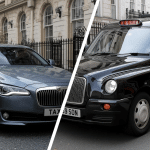


How to Insure a Taxi: UK Guide for Private Hire and Hackney Drivers
Knowing how to insure a taxi properly starts with your licence type, class of use and badge status, not the premium. Private hire and public hire policies are structured differently, and using a car for paid passenger work without the right cover leaves a standard motor policy unlikely to respond at claim time. The details of your vehicle, operating area, annual mileage and driver history all shape what is available and at what price.
- •Private hire and public hire are different classes of use. A policy that does not match your licence type may not respond at claim time, even if the vehicle and driver details are correct
- •Under-describing the work is the most common and most costly mistake. If you say private use when the car is carrying passengers for payment, that is not a technical error. It is a fundamental mismatch that can void the policy
- •Taxi no-claims bonus and private car no-claims bonus are not the same. Do not assume your private car discount transfers at full value to a taxi policy
- •New drivers often find first-year taxi policies harder to place. Being precise about licence status, driving history and the exact vehicle from the start significantly improves the result
“The most common issue we see is drivers describing the work incorrectly, usually to get a lower quote. Private use plus commuting when you are carrying passengers for payment is not a minor discrepancy. It is a different class of cover entirely, and a claim would likely be refused. The second is forgetting occasional drivers or assuming they are covered. If someone may drive the taxi, they need to be on the policy from day one. In taxi insurance, the vehicle is the income. A problem with the policy costs far more than the premium saved.”
If you have tried a standard car insurer for hire and reward work, you have probably already found the problem. Taxi insurance sits in a specialist part of the market, and how to insure a taxi properly depends on your vehicle, your badge, your licensing authority and the kind of work you actually do.
That matters because two drivers with similar cars can need very different policies. A private hire driver working app-based jobs in a city will not always need the same setup as a public hire driver using a plated hackney carriage. If the details do not match the way you operate, you could end up with a quote that looks fine on paper but does not fit your licence or use.
How to insure a taxi: start with your licence and use
The first step is to be clear on what you are insuring. Insurers and brokers will usually want to know whether you are a private hire driver, a public hire driver, or both where local licensing allows it. They will also ask whether the vehicle is already plated, waiting for plating, or being used by a replacement driver.
In taxi insurance, the phrase hire and reward means you are carrying passengers in return for payment. That is the key difference from ordinary social, domestic and pleasure use, or standard commuting. If you use the car for paid passenger work without the right policy, a normal motor policy is unlikely to respond in the way you expect.
You will also need to state who owns the vehicle and who will drive it. Some policies are arranged for owner-drivers, while others are built for rented vehicles, employed drivers or small fleets. If more than one person will use the taxi, named driver details become especially important.
The documents you’ll usually need
You do not need a folder full of paperwork before asking for quotes, but having the right information ready speeds things up. Most brokers will ask for your driving licence details, your taxi badge or badge application status, your no-claims bonus if you have one, and the car’s registration number.
They may also ask for your local authority licence, plate details, proof of address and details of any motoring convictions or claims. A conviction does not automatically stop you getting cover, but it does need to be disclosed accurately. The same applies to accidents, whether or not you think they were minor.
If the vehicle has modifications, declare them. Even changes that seem routine, such as alloy wheels, tinted windows or upgraded audio equipment, can affect how an insurer views the risk. On a taxi, accessibility adaptations or specialist equipment should also be mentioned from the start.
Choosing the right level of cover
Most taxi policies are available as third party only, third party fire and theft, or comprehensive. Comprehensive cover often gives the broadest protection for your own vehicle, but that does not automatically make it the right choice for every driver. Price, excess and policy conditions all need looking at together.
Excess is the amount you pay towards a claim before the insurer contributes. A lower premium with a very high excess can look attractive until you need to claim. For a working taxi, that trade-off matters more than it might on a private car, because time off the road can hurt your income as much as repair costs.
You may also want to consider extras such as legal expenses, public liability, employer’s liability if you employ drivers, breakdown assistance and replacement vehicle options. These are not standard on every policy. Some are genuinely useful, some are less relevant, and the right mix depends on how your business is set up.
What affects the price of taxi insurance
Price is based on risk, and taxi risk is more layered than ordinary car insurance. Your age, driving history, claims record and postcode all play a part, but so do the type of taxi work you do, your operating area, annual mileage and the vehicle itself.
A purpose-built hackney carriage may be viewed differently from a standard saloon used for private hire. Night work, airport runs, city-centre use and long annual mileage can all affect how a broker approaches the market. So can whether the taxi is kept on a driveway, in a garage or on the road overnight.
Your licensing district also matters. Different local authorities have different rules on vehicle age, type and compliance, and insurers know this. If you have recently changed authority or are moving from one area to another, mention it early.
No-claims bonus can help, but taxi no-claims bonus and private car no-claims bonus are not always treated in the same way. Some insurers accept mirrored or transferred experience in certain cases, while others do not. That is one of those areas where assumptions can cost you time.
Factors that typically affect taxi insurance pricing
Comparing quotes without wasting hours
If you have been declined on mainstream sites, that is not unusual. Taxi insurance is often arranged through specialist comparison because the questions are more specific and the market is narrower. A short-form route can save time by letting you submit your details once and letting brokers decide whether they can quote.
That said, do not compare on premium alone. Check the class of use, who can drive the vehicle, the excesses, whether windscreen cover is included, whether there are mileage limits, and whether any conditions depend on your badge or plate being active. A cheaper quote is not much use if the policy setup does not reflect how you work.
Ask what documents are needed before cover can start and whether any restrictions apply while plating or licensing is in progress. If you are switching from one taxi to another mid-term, check the process for changing vehicles and any admin charges. Small details become expensive when the car is your income source.
Compare Taxi Insurance Quotes
Private hire, public hire and hackney carriage. New drivers, points, non-standard vehicles. One enquiry, FCA-regulated brokers. No obligation.
Common mistakes when insuring a taxi
The biggest mistake is under-describing the work. If you say private use plus commuting when the car is carrying passengers for payment, that is not a small technical error. It is a fundamental mismatch that can void the policy entirely.
Another common issue is forgetting to list all drivers or assuming occasional use does not count. If your spouse, business partner or relief driver may use the vehicle, ask how they should be added. Do not leave that question until after a claim.
Drivers also get caught out by licence timing. If your badge renewal, plate renewal or council paperwork is due soon, tell the broker. Some policies can be arranged while certain applications are pending, but not every insurer treats that stage the same way.
Finally, be careful with modifications and imported vehicles. These can be insurable, but they need to be disclosed properly. The more unusual the vehicle, the more useful specialist broking becomes.
How to insure a taxi if you’re new to the trade
New drivers often assume getting insured will be straightforward once they pass the local authority checks. In reality, a first-year taxi policy can be one of the harder ones to place because there is less taxi-specific experience for insurers to assess.
That does not mean you cannot get cover. It means you will usually need to be precise with the basics: your licensing status, driving history, previous occupations involving driving, and exactly what vehicle you plan to use. If you have not bought the car yet, it is often sensible to get indicative terms first so you know what sort of market is available before committing to a vehicle.
If you are renting a taxi rather than buying one, check who is responsible for arranging the policy. In some setups the vehicle owner arranges cover with named drivers added. In others, you arrange your own. Never assume, especially if the vehicle is plated in someone else’s name.
When a broker is usually the better route
Taxi insurance is one of those categories where specialist broking often earns its keep. That is particularly true if you have points, previous claims, a non-standard vehicle, multiple drivers, or a gap between buying the car and getting it fully licensed.
A broker can explain which parts of your situation are likely to matter to insurers and which do not. They can also tell you when a cheaper quote is cheaper for a reason. That is useful if you have already spent too long filling in forms that lead nowhere.
MyMoneyComparison.com is an FCA-regulated insurance comparison service, FCA registration number 916241. You complete one short enquiry and your details are matched with FCA-regulated brokers from its panel, who provide any quotes, cover terms and policy information.
Before you buy, check the working details
When you have a quote you are happy with, read the schedule and certificate carefully. Make sure the vehicle registration, driver names, class of use and address are all correct. Confirm the start date too, especially if you are trying to line up cover with plating, vehicle collection or a renewal deadline.
If anything is unclear, ask before paying. Taxi insurance is not the place for guessing, because small errors can become bigger problems once you are on the road and earning from the vehicle.
The practical next step is straightforward: gather your badge details, vehicle registration, claims history and driver information, then compare specialist taxi quotes based on the way you actually work, not the way a standard motor form assumes you do.
Disclaimer: This article is for general information only and does not constitute insurance or financial advice. Policy terms, cover and premiums vary between providers and depend on individual circumstances. Always seek tailored advice from an FCA-regulated broker. MyMoneyComparison.com Ltd is authorised and regulated by the Financial Conduct Authority (FCA), registration number 916241.
Frequently Asked Questions
Private hire, public hire and hackney carriage. New drivers, points, non-standard vehicles and multiple driver setups. One enquiry, FCA-regulated brokers. No obligation.
- •App-based private hire, hackney carriage, airport work and specialist vehicle setups
- •FCA authorised and regulated, registration number 916241. Free to compare, no obligation
Put your taxi details in once. Get specialist quotes back.
MyMoneyComparison.com connects you with FCA-regulated brokers who specialise in private hire and public hire insurance.
Related Products
Last updated: July 2026



 Founder (2013)
 13+ Years
 FCA Regulated
 LinkedIn