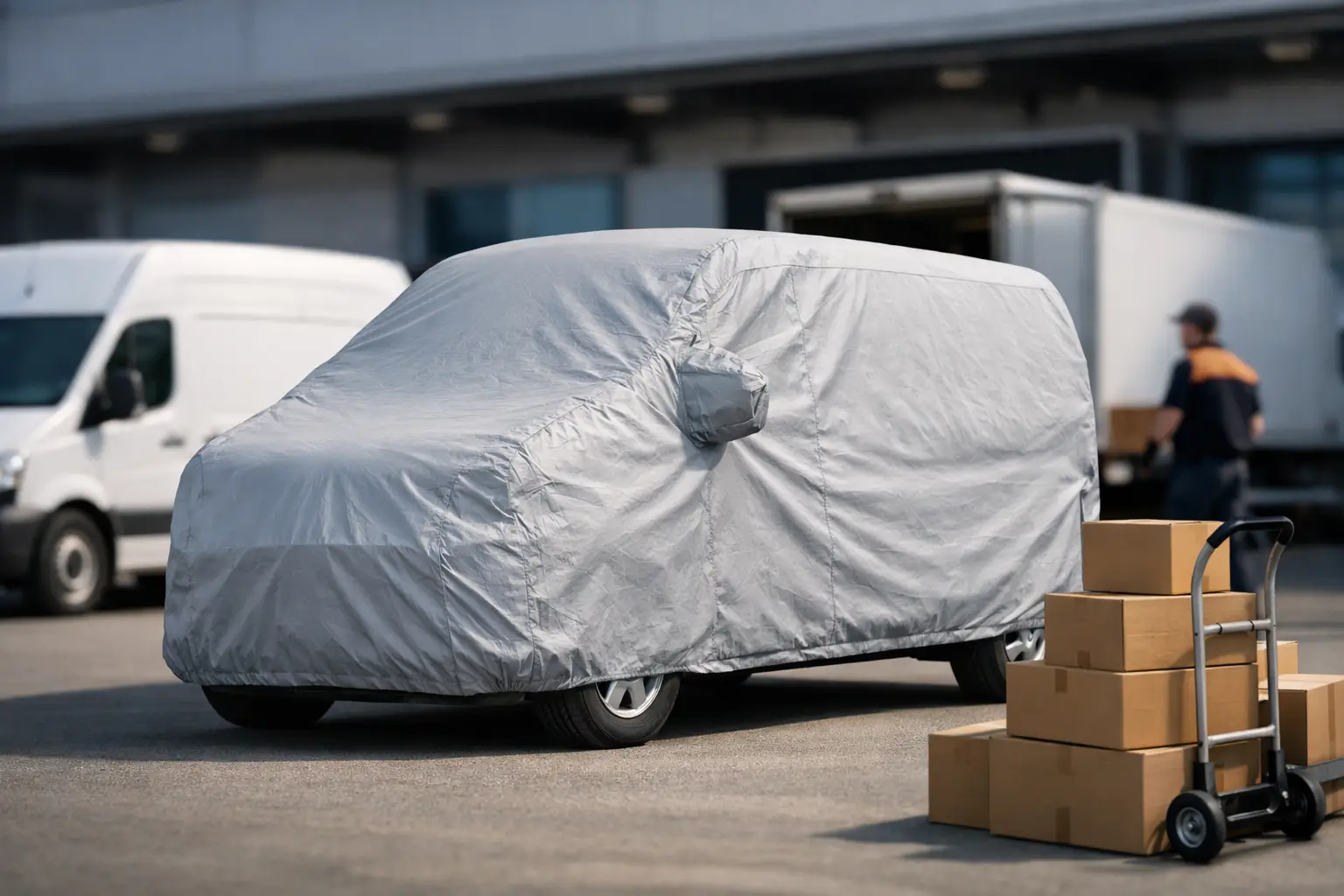
Best Cover for Courier Vans: A UK Guide for Delivery Drivers
The best cover for courier vans is not one standard package. It depends on what you carry, where you travel, who drives and how quickly you need to get back on the road after an incident. The starting point is hire and reward, the class of use required when you are paid to carry other people's goods. Standard social, domestic and pleasure use, or ordinary business use, will not usually meet the needs of parcel delivery work.
- •Comprehensive motor cover does not automatically protect everything connected with your work. Goods in transit, public liability and legal expenses are usually separate sections or optional additions with their own limits
- •Your goods in transit limit should reflect the maximum value carried at one time. Not the value of a typical single parcel. A multi-drop round can contain many items, and a low limit leaves a shortfall after a large loss
- •Van fit-out needs declaring. Shelving, racking, security locks, roof bars, signage and tracking devices may need separate cover or inclusion in the vehicle value
- •Keys left in an unattended van, even briefly during a drop, may affect a claim. Read the security and unattended load conditions and build them into your daily routine
"The goods in transit limit is where most couriers get the sum wrong, and it is an easy mistake to make. People think about the value of one parcel rather than the value of a full van on a busy round. If you are running 100 drops with an average parcel value of £80, that is £8,000 in the back, not £80. A £2,000 goods limit looks adequate on paper and leaves a serious shortfall if the van is stolen loaded. Work out the realistic maximum you carry at any one point in the day and insure to that figure."
A courier van can be your main source of income, so a policy that only looks suitable on price can become a problem when you need to make a claim. The best cover for courier vans is not one standard package. It depends on what you carry, where you travel, who drives and how quickly you need to get back on the road after an incident.
For most delivery drivers, the starting point is hire and reward insurance. That is the class of use needed when you are paid to carry other people's goods. Standard social, domestic and pleasure use, or ordinary business use, will not usually meet the needs of parcel delivery work.
What does the best cover for courier vans include?
The best cover for courier vans starts with the legal minimum: third-party motor insurance. This pays for injury to others and damage to their property if you are at fault. It does not pay to repair or replace your own van after an accident, theft or fire.
Third-party, fire and theft adds protection if the vehicle is stolen or damaged by fire. Comprehensive insurance generally adds accidental damage to your own vehicle as well. For a van you rely on every day, comprehensive protection is often worth considering, but the right option depends on the vehicle's value, finance arrangements and the cost of being without it.
Do not assume that comprehensive motor insurance automatically protects everything connected with your work. Goods in transit, public liability and legal expenses are usually separate sections or optional additions. The wording and limits can differ significantly between insurers.
Hire and reward must match your delivery work
Hire and reward is the key feature for a self-employed courier, multi-drop driver or van owner completing deliveries for a contractor. Tell the broker whether you make local drops, work through a delivery platform, undertake same-day jobs or travel nationwide. These details affect how the risk is assessed.
Be precise about your annual mileage and the nature of your routes. A driver completing 120 drops around a city centre faces different traffic, parking and theft exposures from someone moving between depots on motorway routes. Underestimating mileage or selecting the wrong use category could cause difficulties if information provided at purchase does not reflect your actual work.
If you also use the van privately, ask whether social, domestic and pleasure use is included. Some policies can include commuting or personal use, but this should be confirmed rather than assumed. Our guide to van insurance for couriers covers how the different use classes work.
Goods in transit protects the items you carry
Goods in transit insurance can pay for loss of or damage to customers' items while they are in your care, subject to policy terms. This matters if a parcel is stolen from the van, damaged in a collision or affected by another insured event.
The limit needs to reflect the maximum value you may carry at one time, not the value of a typical single parcel. A multi-drop round may contain many separate items, and a low limit could leave a shortfall after a large loss.
Check the types of goods permitted. High-value electronics, tools, alcohol, temperature-controlled products, hazardous materials and cash can have restrictions, lower limits or exclusions. Insurers may also set conditions around unloading, leaving goods unattended and locking the vehicle.
Liability insurance deals with third-party claims
Public liability insurance is separate from motor insurance. It can protect you if your work causes accidental injury to a member of the public or accidental damage to their property. For example, it may be relevant if a parcel trolley damages a customer's vehicle or someone trips over equipment while you are making a delivery.
Your delivery company or client may specify a minimum liability limit in its contract. Check the requirement before arranging insurance, then make sure the policy schedule confirms the limit you have selected. Employers' liability may also be required if you employ staff, including drivers, depending on your arrangement.
The details that can make a practical difference
When assessing the best cover for courier vans, a policy can look broadly right but still leave you exposed to downtime or costs you had not planned for. Before comparing quotations, consider the following operational points:
Operational points to check before comparing quotes
There is a trade-off in each case. A more extensive policy may provide greater operational support, but it can cost more. The objective is not to add every available option. It is to identify the sections that would genuinely protect your income and contractual commitments. Understanding how excess structures work helps when weighing those trade-offs.
Compare Courier Van Insurance Quotes
Hire and reward, goods in transit and public liability. Multi-drop, same-day and platform work. One enquiry, FCA-regulated brokers. Free to compare.
Van security affects more than theft risk
Courier vans are a target because they may contain goods, equipment and visible branding. Parking habits and security measures can influence an insurer's view of the risk.
Declare where the van is normally kept overnight. A driveway, locked compound, private car park and street parking are not treated the same way. If your arrangements change, such as moving house or taking the vehicle home instead of leaving it at a depot, tell your broker.
Physical security can matter too. Deadlocks, alarms, immobilisers, tracker systems and secure storage may be relevant, particularly where you carry higher-value goods. Do not select security features that are not fitted or working. Insurers may require evidence following a theft claim.
The same applies to keys. Leaving keys in an unattended vehicle, even briefly during a collection or delivery, may affect a claim. Read the policy conditions on vehicle security and unattended loads, then build them into your daily routine.
⚠️ Courier claim problems that start at quotation stage
Choosing between a single-van policy and fleet insurance
One van and one main driver will usually be arranged under a courier van policy. Once you operate several vehicles, employ drivers or change vehicles regularly, fleet insurance may be more practical.
A fleet arrangement can allow vehicles and named or any-driver permissions to sit under one policy, although insurers will still assess driver age, experience, claims history and the type of work. Any-driver terms are not automatically the right choice. They can be useful where shifts change often, but may cost more than a restricted driver list.
For a growing operation, keep clear records of drivers, licences, claims, vehicle checks and overnight locations. These are useful for day-to-day management and make it easier to give accurate information when seeking renewal terms.
Give accurate information when you compare courier insurance
Insurers price courier work using the details supplied. Small omissions can matter. Have your registration number, estimated annual mileage, no-claims history, delivery type, postcode, overnight parking arrangements and details of any claims or convictions ready before you start.
Explain whether you work solely for one contractor or take jobs from several sources. Mention additional drivers, temporary drivers and any previous insurance cancellations or refusals where the application asks for them. Being open does not mean you will be unable to obtain insurance. It gives a broker the information needed to approach suitable insurers and present your circumstances accurately.
When you receive quotations, compare more than the headline premium. Look at the class of use, excesses, goods limit, liability limit, exclusions, replacement-vehicle terms and policy conditions. If two prices differ sharply, there is often a practical reason in the detail.
A single enquiry through MyMoneyComparison.com can put your requirements in front of a panel of FCA-regulated brokers, rather than requiring you to repeat them to several firms. MyMoneyComparison.com is not an insurer and does not set policy terms or prices. Its FCA registration number is 916241.
The best cover for courier vans is the one that matches your round. Before you accept any quotation, ask the broker to confirm that hire and reward use, your delivery activity and any goods or liability requirements are shown correctly. That final check is often the difference between insurance that merely looks suitable and a policy that supports the way you actually work.
Disclaimer: This article is for general information only and does not constitute insurance or financial advice. Policy terms, cover and premiums vary between providers and depend on individual circumstances. Always seek tailored advice from an FCA-regulated broker. MyMoneyComparison.com Ltd is authorised and regulated by the Financial Conduct Authority (FCA), registration number 916241.
Frequently Asked Questions
Hire and reward motor cover, goods in transit and public liability. Multi-drop, same-day, platform work and nationwide routes. One enquiry, FCA-regulated brokers.
- •Single vans and courier fleets. New couriers, convictions and previous cancellations considered
- •FCA authorised and regulated, registration number 916241. Free to compare, no obligation
Describe the round once. Get courier quotes back.
MyMoneyComparison.com connects you with FCA-regulated brokers who understand hire and reward, goods limits and multi-drop work.
Related Products
Last updated: July 2026


 Founder (2013)
 13+ Years
 FCA Regulated
 LinkedIn