Fleet telematics: how it actually reduces your insurance premium
Fleet telematics has gone from a luxury for big logistics operators to one of the single most influential tools shaping how UK insurers price fleet risk. Properly implemented, it can bring fleet insurance premiums down by 10 to 25%, cut accident rates by 15 to 40%, and dramatically improve claims outcomes. The real value extends far beyond the discount itself: telematics gives you the objective data needed to manage drivers effectively, knock 5 to 15% off fuel costs, prevent theft (around 95% recovery rate for tracked vehicles), and run more efficiently overall. The fleets seeing the best results treat telematics as a fleet management tool that happens to bring insurance costs down, not just as a discount mechanism.
Key takeaways
- →Insurers value telematics because it replaces self-reported risk management with objective data. The single biggest shift in fleet pricing in the past 15 years
- →Immediate installation discounts of 5 to 15% are typical, with another 10 to 25% performance-based saving at renewal once 6 to 12 months of data exists
- →High-impact metrics underwriters care about: speeding frequency and severity, harsh braking, harsh acceleration, cornering forces, night-time driving, score trends, and mileage accuracy
- →Most fleets achieve positive ROI within 6 to 12 months through combined insurance, fuel, and claims reduction benefits, even on conservative assumptions
- →Active management beats passive monitoring. Fleets that review data weekly and coach drivers monthly see 34% fewer at-fault accidents than fleets that just collect the data
A decade ago, you’d struggle to find a UK fleet broker who even mentioned telematics. Today, it’s increasingly the first question underwriters ask: “Do you have telematics installed?”
The transformation isn’t accidental. Insurers have built up millions of data points proving that monitored fleets genuinely perform better. For UK businesses running multiple vehicles, properly implemented telematics can knock 10 to 25% off insurance premiums, bring accident rates down by 15 to 40%, and dramatically improve claims outcomes.
But here’s what most businesses miss: the real value extends far beyond the simple discount. Telematics gives you the objective data needed to manage drivers effectively, bring fuel costs down by 5 to 15%, prevent theft (around 95% recovery rate for tracked vehicles), and operate more efficiently overall.
This guide breaks down how telematics actually works, why insurers value it so highly, what data they really care about, and crucially, how to put systems in place in ways that genuinely bring your fleet insurance costs down rather than just adding technology overhead.
💬 From the MMC fleet team | FCA Reg. 916241
“From an underwriter’s perspective, telematics represents the single biggest shift in fleet insurance pricing in the past 15 years. We’ve moved from pricing based on what businesses tell us about their risk management to pricing based on what their vehicles actually demonstrate. That’s a fundamental change in how we assess and reward good fleet operators.”
What exactly is fleet telematics?
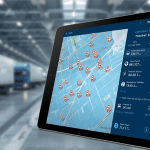
At its core, telematics combines telecommunications and informatics: technology that collects vehicle data and transmits it in real time for analysis and action. The term covers everything from basic GPS trackers reporting location to sophisticated AI-powered platforms monitoring dozens of parameters.
Most modern systems include GPS tracking (location, routes, operating patterns), accelerometers (harsh braking, acceleration, cornering forces), on-board diagnostics (engine performance, fault codes, fuel consumption, mileage verification), speed monitoring (actual versus limits, frequency and severity of violations), and journey logging (complete trip histories, duration, distance, time of day).
Advanced systems add AI dashcams (forward and driver-facing video with collision detection), driver behaviour scoring (individual risk profiles, performance trends), real-time alerts (immediate notification of speeding, harsh braking, geofence breaches), and fatigue monitoring (AI detection of tiredness, break compliance tracking).
💡 Insurance tip: focus on what insurers actually value
GPS tracking plus speed and harsh braking monitoring covers 80% of what underwriters assess. Dashcams add significant value for claims evidence. Don’t pay for operational features that don’t influence insurance pricing unless you need them for fleet management.
The key benefit is objective, unbiased data showing exactly how vehicles are driven, replacing reliance on driver self-reporting or hopeful assumptions about policy compliance. For comprehensive context on how this influences pricing, see our fleet insurance fundamentals guide.
Why insurers care so much about telematics
Traditionally, insurers priced fleets based on historical data and what businesses told them about risk management. The challenge was verification: businesses naturally presented themselves favourably, and insurers had limited ability to confirm claims about “safe driving culture.”
Telematics fundamentally changes this by providing objective risk measurement (actual driving behaviour versus claimed behaviour), predictive pricing (deteriorating driving standards identified before claims occur), verification of declarations (actual mileage, operating radius, compliance with policies), and claims validation (contemporaneous evidence settling disputes rapidly).
🔍 Insurer insight
Telematics often contradicts what businesses believe about their fleets. Hundreds of cases reviewed where fleet managers were convinced they had “safe drivers” because claims were low, but telematics revealed widespread speeding and harsh braking that just hadn’t resulted in claims yet through luck. Those fleets typically see claims frequency push up 12 to 18 months later if behaviour doesn’t change.
Insurers use telematics to understand how safely drivers actually behave (real speeding patterns, harsh braking frequency, consistency across drivers), how intensively vehicles are used (accurate mileage, operating hours, route patterns), where and when operations occur (urban versus rural, high-theft exposure, congested routes), and how quickly behaviour responds to interventions (whether coaching works, if management actively uses data).
📊 Quick stat
Analysis of over 200,000 UK fleet vehicles shows those with active management (weekly reviews, monthly coaching, quarterly performance assessments) experience 34% fewer at-fault accidents than passive monitoring (data collected but rarely acted upon), despite similar initial risk profiles.
How telematics brings fleet insurance premiums down
Premium reduction works through several mechanisms, some immediate and others building over time. Each layer compounds with the others, which is why well-managed telematics fleets often see 30 to 40% cumulative premium reductions over three years.
1. Immediate installation discounts (5 to 15%)
Many UK insurers offer upfront discounts for installing approved telematics: basic GPS tracking (5 to 10%), driver behaviour monitoring (10 to 15%), and AI dashcams with behaviour monitoring (15 to 20%). These apply from policy inception, before any performance data exists, though insurers increasingly condition discounts on regular data sharing.
2. Performance-based renewal discounts (10 to 25% additional)
Substantial savings turn up at renewal after 6 to 12 months of driving data. Fleets demonstrating consistently safe patterns receive lower base premiums (10 to 25% reduction), reduced excess levels, more favourable any-driver terms, and fewer restrictions.
Insurers particularly reward low speeding rates, minimal harsh braking, limited night driving, improving score trends, and mileage accuracy.
💡 Insurance tip
Create a one-page telematics summary for renewal showing average driver score improvements, speeding rate reduction, harsh braking reduction, accident impact, and specific interventions taken. Insurers respond positively to evidence of active data use, not passive collection.
3. Reduced accident frequency (15 to 40% fewer claims)
Monitored driving changes behaviour significantly. Real-world improvements include 20 to 40% fewer speeding events, 15 to 30% fewer harsh braking incidents, 10 to 25% fewer overall collisions, 15 to 35% fewer at-fault claims, and 30 to 50% fewer disputed claims.
💼 Real example
A Birmingham plumbing company with 14 vans installed behaviour telematics after a 38% renewal increase following four claims. Within six months, harsh braking dropped 31%, and speeding fell 24%. After 12 months with just one claim (versus historical 3 to 4), the renewal premium decreased 22% despite previous claims still on record.
4. Faster claims resolution (10 to 20% cost reduction)
Telematics provides exact location, speed data, braking patterns, journey context, and dashcam footage (where installed), dramatically speeding up settlements. This brings down third-party vehicle hire costs, legal expenses, storage charges, and fraud attempts.
5. Improved theft recovery (5 to 10% savings)
GPS tracking delivers around 95% recovery within 48 hours versus a much lower rate for non-tracked vehicles. Quick recovery means repair versus total loss, minimal damage (less time for thieves to cause harm), a protected claims record, and lower overall costs.
Compare fleet insurance
Get a fleet quote that reflects your telematics
Specialist UK fleet brokers who know how to present telematics evidence to underwriters. Free comparison, no obligation.
What telematics data insurers actually scrutinise
Not all telematics data carries equal weight in insurance pricing. Understanding what insurers prioritise helps you focus your driver management efforts on the factors that actually influence premiums.
| Metric | Impact on pricing | Why it matters |
|---|---|---|
| Speeding frequency and severity | High | Single most heavily weighted factor. Categorised: minor (1 to 10mph over), moderate (11 to 20mph), serious (21 to 30mph), severe (30mph+) |
| Harsh braking events | High | Indicates following too closely, inattention, or aggressive driving. Clusters suggest consistently risky behaviour |
| Harsh acceleration | High | Signals aggressive driving, unnecessary risk-taking, or mechanical stress on vehicles. Less weighted than braking but still significant |
| Cornering forces | High | Excessive cornering g-forces suggest inappropriate speed for conditions, particularly combined with other risk indicators |
| Night-time driving | High | Accidents between 11pm and 6am are statistically more severe and more likely to be at-fault |
| Driver score trends | High | Whether individual drivers and the fleet are improving, stable, or deteriorating. Trend direction often matters more than absolute scores |
| Mileage accuracy | High | Significant discrepancies between declared and actual mileage raise fraud concerns and trigger premium increases |
| Idling time | Moderate | Suggests inefficiency but doesn’t directly predict accidents. Some insurers treat as a fleet management quality indicator |
| Fuel efficiency | Moderate | Indicates how smoothly vehicles are driven. Very poor fuel efficiency sometimes correlates with aggressive driving |
| Journey efficiency | Moderate | Optimal routes versus actual routes. Suggests professional versus careless operation |
🔍 Insurer insight
Businesses sometimes proudly present detailed telematics reports showing fuel efficiency improvements, route optimisation, and reduced idling time, expecting insurance discounts. While these are excellent fleet management achievements, they don’t influence pricing unless they correlate with the risk metrics insurers actually underwrite: speed, braking, acceleration, and mileage accuracy. Focus your driver management on safety metrics if insurance cost reduction is your primary goal.
Types of telematics systems and their insurance impact
Different telematics solutions deliver different levels of insurance benefit. Understanding the differences helps you choose systems that produce the premium reduction you’re targeting.
| System | Immediate discount | Long-term benefit | Best for |
|---|---|---|---|
| Basic GPS trackers | 5 to 10% | High theft recovery (around 95%); minimal behaviour change | Small fleets (2 to 5 vehicles), rural operations, low theft risk, experienced drivers |
| Driver behaviour telematics | 10 to 20% | 15 to 25% renewal reduction for well-managed fleets | Trades and service fleets, delivery, regional operations, any-driver policies, mixed-experience drivers |
| AI-powered dashcams | 15 to 25% | 20 to 30% benefit; 40 to 70% reduction in disputed claims; very high fraud prevention | Urban fleets, courier and delivery, taxi/PHV, businesses with disputed claims history, high-fraud areas |
| Enterprise platforms | 15 to 25% | Comprehensive risk management; very positive insurer perception | Larger fleets (20+ vehicles), complex operations with mixed vehicle types, integrated fleet management needs |
Driver-facing cameras: an important consideration
Driver-facing cameras need careful implementation, clear communication about privacy, transparency about how footage is used, consent processes, and data protection compliance. Poorly implemented driver-facing cameras create employee relations issues that undermine other benefits.
For guidance on managing various vehicle types under one policy, see our mixed fleet insurance guide.
Calculating telematics return on investment
Working out whether telematics delivers positive ROI means looking beyond just insurance discounts to the complete cost-benefit picture. For most fleets, the combined savings cover the system cost several times over within 12 months.
Typical telematics costs (per vehicle)
| System type | Monthly cost | Installation | Annual total |
|---|---|---|---|
| Basic GPS | £8 to £15 | £50 to £120 | £96 to £300 |
| Behaviour monitoring | £12 to £25 | £80 to £150 | £144 to £450 |
| AI dashcams | £18 to £40 | £150 to £250 | £216 to £730 |
| Enterprise platform | £25 to £60 | £150 to £300 | £300 to £1,020 |
Where the savings come from
Insurance premium reduction: For a fleet paying a £3,000 annual premium per vehicle, a 15% reduction saves £450 per vehicle annually, and a 25% reduction saves £750 per vehicle.
Fuel cost reduction: Smoother driving typically brings fuel consumption down by 5 to 15%. For a van covering 25,000 miles annually at 35mpg and £1.50 a litre, a 10% fuel saving comes to roughly £485 a year.
Accident reduction: Avoiding one £2,000 claim (which would affect premiums for 3 to 5 years) saves far more than the immediate claim cost through prevented premium increases.
Reduced vehicle downtime: Fewer accidents mean fewer days off-road, less lost productivity, and maintained customer service levels.
Theft recovery: Recovering a stolen £25,000 van rather than total loss represents £20,000+ saved (after accounting for repair costs).
Maintenance optimisation: Early warning of mechanical issues prevents breakdowns and extends vehicle life. Better driving also brings tyre, brake, and component wear down, extending service intervals.
ROI example: medium trades fleet
Worked example
Fleet profile: 10 vans, mixed ages, regional operation. Current insurance: £28,000 annually (£2,800 per vehicle). Telematics choice: Driver behaviour system at £18 a month per vehicle.
Costs:
- Installation: £1,200 (£120 × 10 vehicles)
- Annual subscription: £2,160 (£18 × 12 × 10)
- Total first year: £3,360
Benefits (conservative estimates):
- Insurance reduction (15%): £4,200
- Fuel savings (8%): £3,600
- Reduced claims (avoiding 1 × £2,500 claim): £2,500
- Total first year: £10,300
Net benefit year 1: £6,940 · ROI: 206% · Payback period: 4 months
Even using conservative assumptions, most fleets achieve positive ROI within 6 to 12 months through combined insurance, fuel, and claims reduction benefits.
💡 Insurance tip: benefits compound over multiple years
When working out telematics ROI, remember that insurance benefits compound over multiple years. A 15% premium reduction in year 1 establishes a new baseline, then further improvements in years 2 to 3 can deliver additional reductions off that lower base. Well-managed fleets achieve cumulative premium reductions of 30 to 40% over three years through consistent telematics-driven improvements.
Common telematics mistakes that reduce insurance benefits
Most failed telematics implementations don’t fail because the technology was wrong. They fail because of how the business used (or didn’t use) the data. Five mistakes account for the bulk of underwhelming results.
-
1.
Installing but not managing data. Businesses install telematics for the immediate discount but never review reports or provide feedback. Driver behaviour doesn’t improve, and renewal discounts don’t materialise. Solution: weekly scorecard reviews, quarterly coaching, and documented interventions -
2.
Punishment over improvement. Using telematics purely for discipline creates adversarial relationships. Solution: frame as a safety tool, reward improvements, and coach before punishing -
3.
Not sharing improvements with insurers. Achieving driving improvements but never telling insurers means missed renewal opportunities. Solution: provide quarterly reports to brokers, create renewal submissions highlighting improvements -
4.
Choosing on price alone. Cheapest providers may not provide data that insurers value or integrate properly. Solution: check insurer-approved lists, verify metrics match what insurers score -
5.
Poor driver communication. Installing without consultation creates legal and employee relations issues. Solution: transparent explanation, clear privacy policies, and formal consent for driver-facing cameras
How to put telematics in place successfully
Phase 1: pre-implementation
Select a system based on insurer compatibility and the insurance metrics it provides. Communicate early with drivers, explaining safety benefits. Set clear performance standards (acceptable speeding, braking thresholds). Brief your broker on the chosen system before going live.
Phase 2: installation and rollout
Use certified installers. Collect 2 to 4 weeks of baseline data without consequences so drivers see the system working without immediate pressure. Provide initial driver education on scoring and how scores improve.
Phase 3: active management
Weekly score reviews identifying issues and top performers. Monthly one-to-ones for personalised coaching. Quarterly performance reviews analysing fleet-wide trends. Annual insurer reporting compiling improvement evidence.
✓ Action point
Create a “Telematics Action Log” tracking each intervention (coaching, training, policy changes) linked to data triggers (scores, speeding, harsh braking). This log demonstrates active management to insurers, typically achieving 10 to 15% better renewal terms.
Real-world telematics success stories
These detailed examples show how different fleet types achieve insurance savings through effective telematics use. The pattern is consistent across very different operations.
Example 1: small trades fleet overcomes claims spike
Business: Electrical contractor, Sheffield. Fleet: 6 vans (Ford Transit Custom, 2 to 4 years old). Challenge: Four small claims in 12 months (two at-fault minor collisions, two parking damage incidents) triggered a 32% renewal increase from £2,100 to £2,772 per vehicle.
Solution: Driver behaviour telematics (£16 a month per vehicle) with weekly scorecard reviews and monthly one-to-one coaching for the lowest scorers.
Results after 6 months: Harsh braking events down 32% (from 8.2 per 100 miles to 5.6); speeding violations over 10mph down 41% (from 24 incidents a month fleet-wide to 14); zero claims in the six-month period (versus historical average of 2); drivers in the bottom 20% of scores improved into the middle 50% through targeted coaching.
Insurance outcome: The following renewal premium came down 17% to £2,301 per vehicle despite claims still on record. Insurer cited “demonstrable improvement in driver behaviour management” in renewal justification. Combined with fuel savings (estimated £380 per vehicle annually from smoother driving), ROI was achieved in 4 months.
Example 2: courier fleet brings accident frequency down
Business: Same-day courier, Manchester. Fleet: 22 vans (mixed Sprinter and Transit, high mileage 40,000+ annually). Challenge: High accident frequency (14 incidents in 18 months, 8 at-fault), making the fleet nearly uninsurable. Two insurers declined renewal, and one offered renewal at an 87% increase.
Solution: AI dashcams with driver-facing cameras (£32 a month per vehicle) plus a comprehensive driver training programme triggered by scores and incidents.
Results after 12 months: At-fault collisions down 41% (from 8 in the previous 18 months to 3 in the following 18); disputed claims down 63% (dashcam footage settled 7 of 11 claims within 48 hours); driver score improvement from fleet average 62/100 to 78/100; three consistently poor performers left the business, replaced with better drivers evidenced by telematics during probation.
Insurance outcome: Secured a new insurer at a premium 24% below the previous year, despite claims history, based on demonstrated risk reduction through telematics. Dashcam evidence settled three claims in the insured’s favour that would previously have been settled split-liability or against, saving an estimated £12,000 in claim costs and protecting future premiums.
Example 3: mixed fleet improves theft recovery
Business: Facilities management, Bristol. Fleet: 18 vehicles mixed (8 cars for management, 10 vans for engineers, 2 electric vehicles). Challenge: Three vehicle thefts in 14 months (total claim costs £67,000), renewal premium pushed up 44%, insurer threatening to exclude theft cover entirely for certain postcodes.
Solution: GPS tracking across the entire fleet (£12 a month per vehicle) with geofencing for high-risk areas and immediate alerts for unauthorised movement.
Results after 12 months: One attempted theft, vehicle recovered within 6 hours with minimal damage (£800 claim versus typical £22,000 total loss); geofence alerts identified two instances of unauthorised personal use, addressed through policy enforcement; accurate mileage verification (telematics data matched declared usage within 3%).
Insurance outcome: Renewal premium came down 12% from the inflated previous year. Insurer agreed to keep theft cover across all operating areas with GPS tracking mandatory. The system paid for itself through the first theft recovery alone, and the ongoing insurance benefit of £1,900 a year is pure savings.
Presenting telematics data to insurers effectively
Achieving improvements is half the work. The other half is presenting them so underwriters actually use them in pricing. A simple 2 to 3 page renewal submission does this far better than a glossy report.
Page 1: Executive summary. Fleet size and composition, telematics type and coverage, key improvements (3 to 5 bullets with percentages), claims reduction achieved.
Page 2: Detailed metrics. Driver score trends (12-month graph), risk metric improvements (before/after table), intervention examples (3 to 4 specific cases).
Page 3: Forward commitments. Ongoing monitoring frequency, training plans, technology upgrades planned, performance targets for next year.
🔍 Insurer insight
The renewal submissions that influence pricing most effectively aren’t glossy presentations. They’re simple documents showing where you started, where you are now, and what specific actions achieved improvement. “We installed telematics, and claims went down” is okay. “We installed telematics, identified Driver A with consistent speeding, provided coaching on 15/06/25, scores improved from 52 to 74, Driver A has had zero incidents since” gets you preferred pricing.
Next steps: putting telematics in place
Considering telematics (immediate): request quotes from 3 to 4 providers; check the current insurer about preferred partners and discounts; compare based on insurance metrics (not just features).
Have telematics but not seeing savings (within 30 days): audit current data usage; create a 90-day improvement plan with clear targets; put in place weekly reviews and monthly coaching.
At next renewal (90 days before): compile 12-month telematics evidence; brief broker on improvements with data; provide written summary of active management; request specific review of telematics impact.
✓ Action point
Schedule a 90-minute “telematics strategy session” this month to review your current approach, identify insurance cost reduction targets, plan driver communication, and set the implementation timeline. This session can identify opportunities for thousands in annual savings.
Disclaimer: This article provides general information about fleet telematics and its impact on UK fleet insurance. Premium reductions, savings figures, and ROI examples are illustrative based on industry experience and individual fleet results vary significantly. Always confirm specific telematics discounts and policy conditions with your insurer or broker. MyMoneyComparison.com Ltd is authorised and regulated by the Financial Conduct Authority (FCA), registration number 916241.
Compare fleet insurance
Get a fleet quote that recognises your telematics
Specialist UK fleet brokers who present telematics evidence to underwriters properly. All fleet sizes and vehicle types. FCA regulated, free comparison, no obligation.



 Founder (2013)
 13+ Years
 FCA Regulated
 LinkedIn